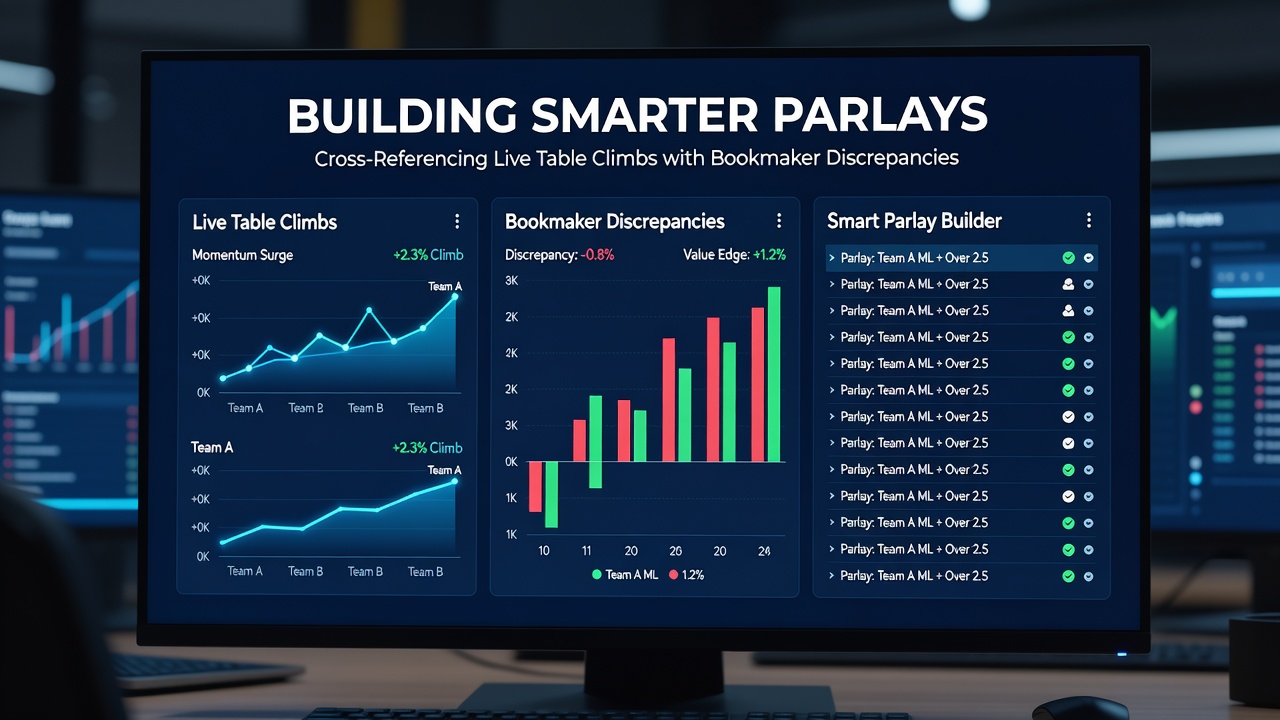
Building Smarter Parlays by Cross-Referencing Live Table Climbs with Bookmaker Discrepancies
Live league tables shift constantly during matchdays and these movements create opportunities when compared against varying odds from different operators. Observers note that teams climbing positions often trigger uneven price adjustments across platforms, which opens windows for parlay construction based on those gaps rather than single-bookmaker lines alone.
Tracking Live Standings in Real Time
League positions update after every goal and this real-time data feeds directly into market recalibrations at betting sites. Researchers discovered that early climbers in divisions like the Championship tend to see their win probabilities adjusted at different speeds depending on the operator's data feeds and risk models. Those who've studied this process know the fastest movers appear first on certain platforms while others lag by several minutes, creating temporary mismatches that experienced bettors monitor through multiple tabs or APIs.
Data from the 2025-26 season showed several mid-table sides gaining three places within ninety minutes of play, and these ascents produced measurable odds compression at some books yet slower responses elsewhere. Cross-referencing these climbs with the actual table graphic allows bettors to spot where one operator still prices a side as mid-pack while another has already shortened the price for a top-six finish.
Spotting Price Variations Across Operators
Bookmaker discrepancies arise from differences in margin structures, liquidity, and update frequency. According to reports published by the International Betting Integrity Association, variations in live odds can exceed two percent between major platforms during high-volume periods. Such differences compound when multiple selections enter a parlay, turning small edges into larger combined value.
People often find that a team surging up the table receives an immediate line move on one site while a competitor maintains its previous quote for another ten or fifteen minutes. This lag creates the raw material for smarter accumulators because the bettor can pair the quicker-adjusted price with selections from slower markets, locking in the discrepancy before it closes.
Constructing Parlays Around Table Momentum
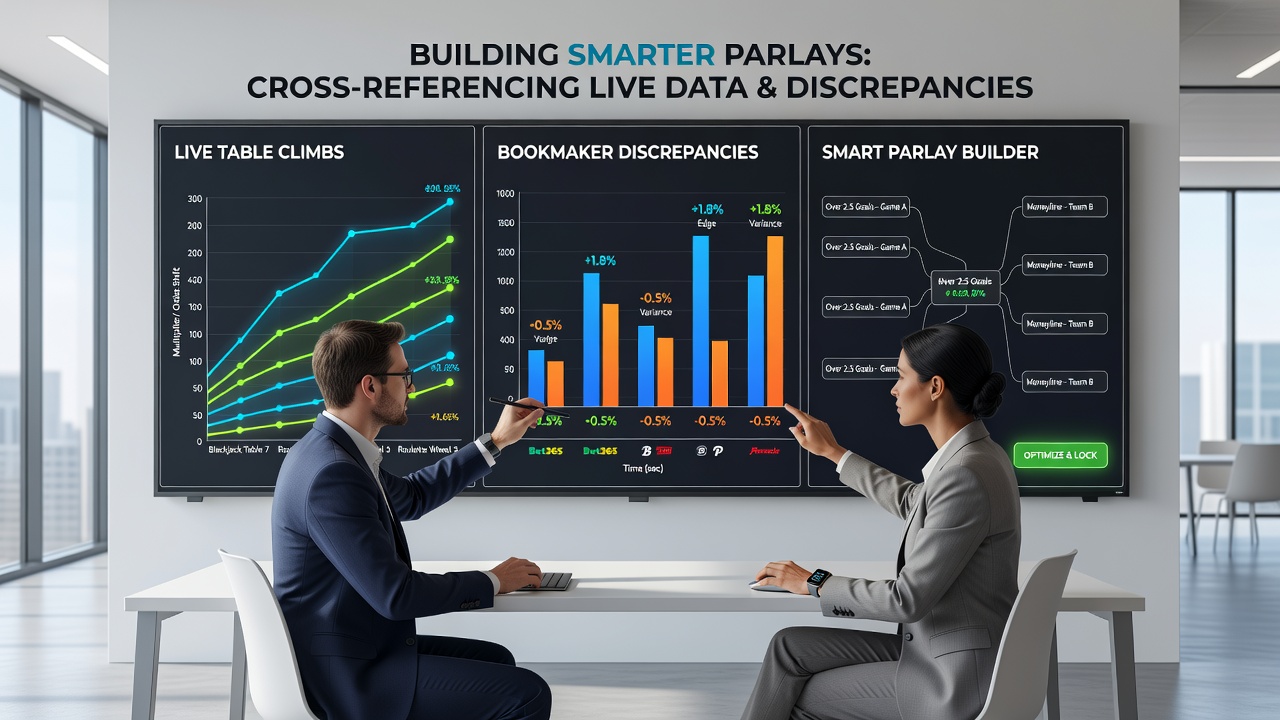
Effective parlay building starts with identifying two or three teams whose table positions have improved markedly within the last hour. Bettors then check each selection across at least four operators to locate the longest available price on the team still undervalued relative to its new standing. The process repeats for every leg, ensuring the accumulator captures the widest possible gap at each step rather than settling for the shortest line offered anywhere.
Studies from the University of Nevada's International Gaming Institute indicate that systematic comparison of live standings against multi-book odds reduces variance in accumulator outcomes over large sample sizes. The method works because table climbs reflect objective performance data while bookmaker lines incorporate subjective risk adjustments at different speeds. Combining the two sources produces selections grounded in measurable movement instead of isolated pricing.
June 2026 brings additional layers as pre-season friendlies and early cup fixtures generate initial table movements in lower divisions. These early climbs often receive inconsistent coverage from operators focused on bigger leagues, widening the window for cross-referenced parlays before mainstream attention narrows the gaps.
Practical Monitoring Techniques
Bettors maintain live table dashboards next to odds comparison tools so both data streams appear simultaneously. When a side gains ground, the next action involves refreshing each bookmaker's market for that fixture or outright market. If one platform has already shortened the price while others have not, the longer quote becomes the candidate for inclusion in the parlay. This sequence repeats across selections until the accumulator reaches the desired number of legs.
What's interesting is how fixture congestion in summer 2026 schedules can accelerate table shifts in leagues resuming after international breaks. Teams with favorable early calendars climb faster, and operators with regional focus sometimes price those movements ahead of global books, again creating the exact conditions where cross-referencing pays off.
Conclusion
Cross-referencing live table climbs with bookmaker discrepancies supplies a structured approach to parlay construction that relies on observable data rather than intuition. By monitoring position changes in real time and comparing prices across multiple operators, bettors can assemble accumulators that reflect the latest standings while capturing temporary pricing inefficiencies. The method scales across divisions and remains relevant during both regular season and pre-season periods such as June 2026, when early movements often receive uneven attention from different platforms.