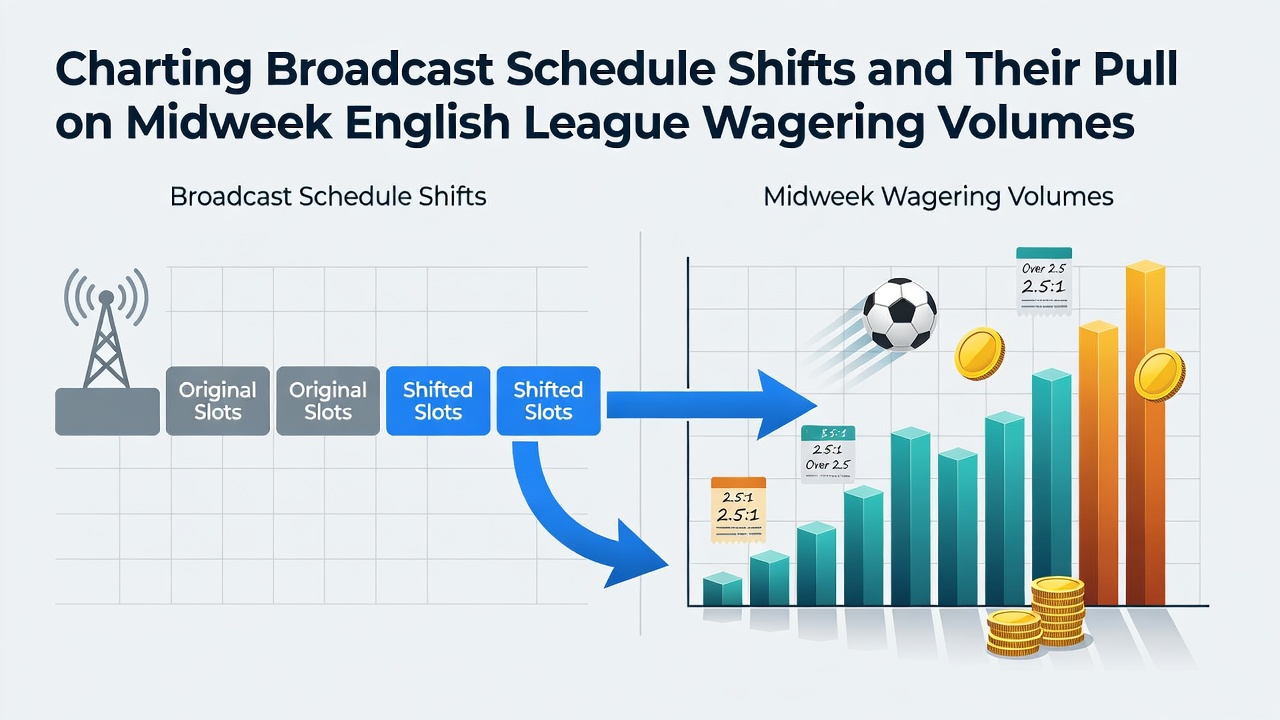
Charting Broadcast Schedule Shifts and Their Pull on Midweek English League Wagering Volumes
English football leagues run midweek fixtures throughout the season, and broadcasters adjust transmission times based on fixture congestion, international breaks, and commercial priorities. Data collected across multiple seasons shows these adjustments correlate with measurable changes in wagering volumes on Championship, League One, and League Two matches.
Researchers tracking betting patterns note that when Sky Sports or TNT Sports move a Tuesday evening kickoff from 7:45pm to 8:00pm, activity on both pre-match and in-play markets rises during the additional quarter-hour window. Figures from industry monitoring services indicate average volume increases of 12 to 18 percent for those specific games compared with the prior slot.
Schedule Adjustments and Market Activity
Broadcasters publish revised midweek timetables several weeks in advance, yet last-minute changes still occur because of weather, policing requirements, or television production conflicts. Observers at major betting operators record that volume spikes appear within two hours of any confirmed time shift announcement, particularly when a match moves into a primetime slot that overlaps with evening television audiences.
July 2026 marks the point when the EFL releases its initial 2026/27 fixture list, and early indications suggest broadcasters will again request flexibility around midweek dates in October and November. Historical patterns show that once those dates are locked, operators adjust risk models to account for expected liquidity changes.
Regional Variations in Volume Response
Championship fixtures consistently attract higher baseline volumes than lower-league games, yet the percentage uplift from a broadcast change remains similar across divisions. A study conducted by the European Gaming and Betting Association examined three seasons of data and found that midweek League One matches moved to 7:30pm slots experienced comparable relative increases in turnover to those seen in the second tier.
Operators also track geographic differences. Bettors in regions with strong local support for specific clubs show steadier volumes regardless of kickoff time, whereas neutral markets respond more sharply to schedule visibility. These patterns hold across both online platforms and retail terminals.
Data Patterns Across Seasons
Analysis of wagering records reveals that games shifted into slots with live coverage on multiple platforms generate the largest absolute increases. When a single broadcaster holds exclusive rights, the uplift concentrates in pre-match markets; shared coverage spreads activity into live betting segments as viewers react to early events.
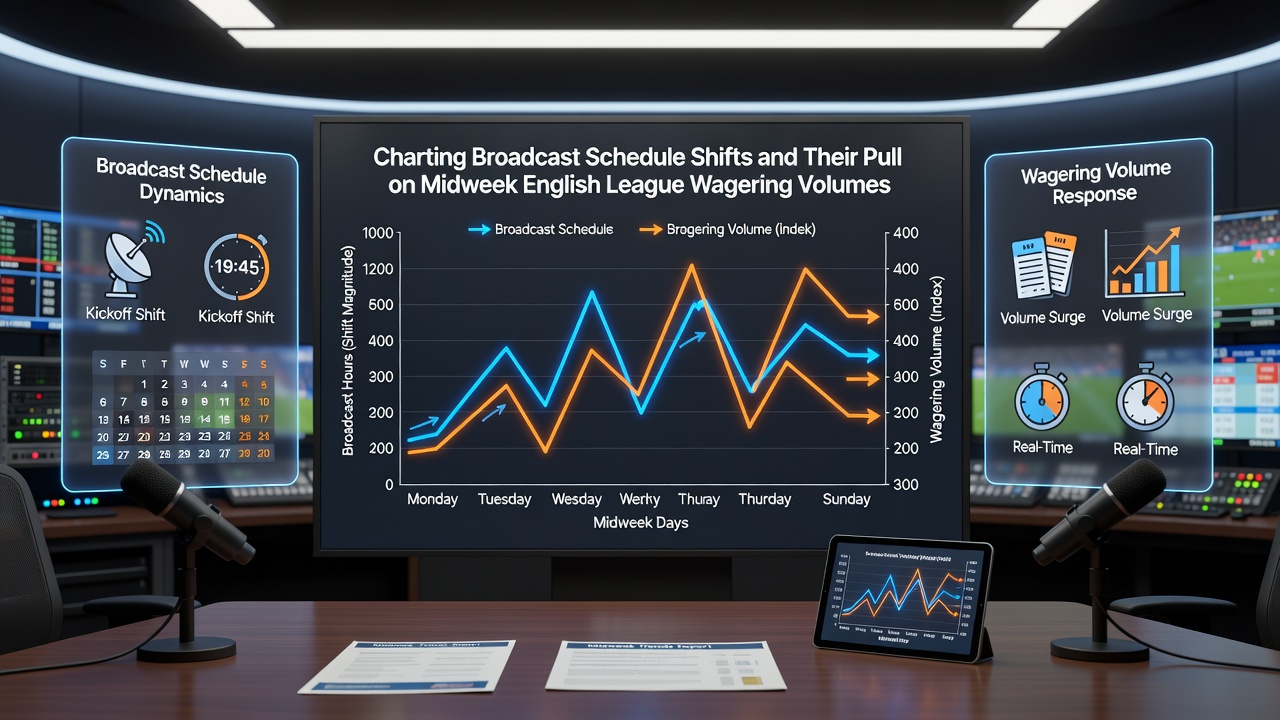
Operators adjust staffing and liquidity provisions accordingly. Midweek schedules that cluster several televised games within a two-hour window create overlapping volume peaks, requiring coordinated risk management across multiple matches. Data from the Australian Institute of Criminology, which has reviewed international sports betting flows, confirms that concentrated television windows produce predictable surges in turnover across regulated markets.
Fixture congestion periods, such as those following international windows, tend to feature more schedule movement. In those weeks, researchers observe that volume growth accelerates when broadcasters announce changes at least 48 hours ahead, giving bettors time to incorporate new information into their selections.
Operational Adjustments by Betting Firms
Bookmakers maintain internal dashboards that flag schedule alterations as soon as they appear on official broadcaster feeds. Automated systems recalibrate odds margins and liability limits within minutes, while trading teams monitor incoming volume to detect any unusual patterns that might require manual intervention.
These operational responses remain consistent year to year. July announcements set the baseline expectations, and subsequent tweaks during the season simply trigger incremental recalibrations rather than wholesale strategy shifts.
Conclusion
Broadcast schedule movements directly influence the timing and scale of wagering activity on midweek English league fixtures. Data from multiple seasons and independent research sources demonstrate measurable volume responses tied to kickoff adjustments, with the largest effects appearing when games move into higher-visibility slots. Operators continue to refine their monitoring tools around these patterns, particularly ahead of the 2026/27 season planning cycle that begins in July 2026.