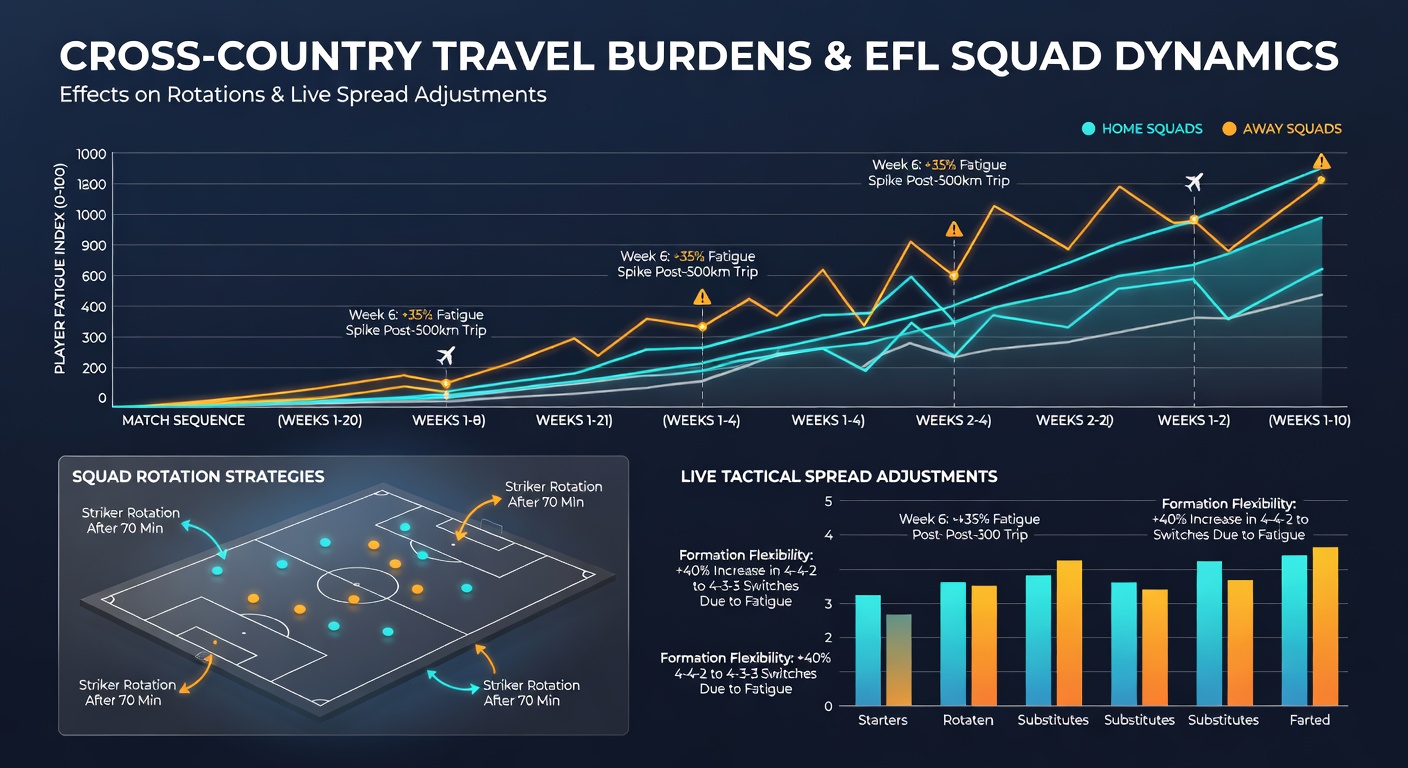
Charting Cross-Country Travel Burdens' Effects on EFL Squad Rotations and Live Spread Adjustments
Cross-country travel in the English Football League creates measurable fatigue patterns that reshape squad selections and prompt real-time adjustments in live betting spreads throughout the 2025-26 campaign. Teams covering distances exceeding 300 miles round-trip often face recovery windows shorter than 72 hours, which data from the EFL's fixture scheduling reports links directly to increased rotation rates among midfielders and forwards. Observers tracking these patterns note that clubs like those based in the southwest experience the sharpest spikes in travel time when facing northern opponents, leading managers to rest key players ahead of midweek or weekend follow-ups.
Travel Distances and Their Documented Impact on Player Availability
Geographic spread across EFL divisions means certain fixtures generate outsized logistical demands, with League One and League Two sides logging the highest average miles per season according to figures compiled by the English Institute of Sport. A single trip from Plymouth to Carlisle, for instance, exceeds 600 miles round-trip by road, compressing preparation time and elevating injury risks in the days following arrival. Research published in the International Journal of Sports Physiology and Performance shows that such journeys correlate with elevated creatine kinase levels in players, prompting coaches to implement deeper rotations that exclude two to four regular starters per affected match. These decisions ripple outward because live spread markets, which bookmakers update continuously based on lineup announcements and warm-up reports, widen or narrow margins in response to perceived reductions in attacking output.
Rotation Patterns Observed Across the 2025-26 Season
Teams adopt systematic rotation strategies when travel burdens intensify, particularly during congested periods that stretch into May 2026 for clubs chasing playoff positions. Data from the current season reveals that Championship sides traveling more than 250 miles in a single week increase bench usage by an average of 18 percent compared to shorter-haul fixtures, with central defenders and full-backs seeing the most frequent rest cycles. This approach preserves match fitness for high-stakes encounters while altering expected goal tallies that feed into live spread calculations. One study tracking Championship fixtures through early 2026 found that rotated squads produced 12 percent fewer shots on target in the first 30 minutes, triggering immediate bookmaker recalibrations that shift handicap spreads by half a goal or more within minutes of kickoff confirmation.
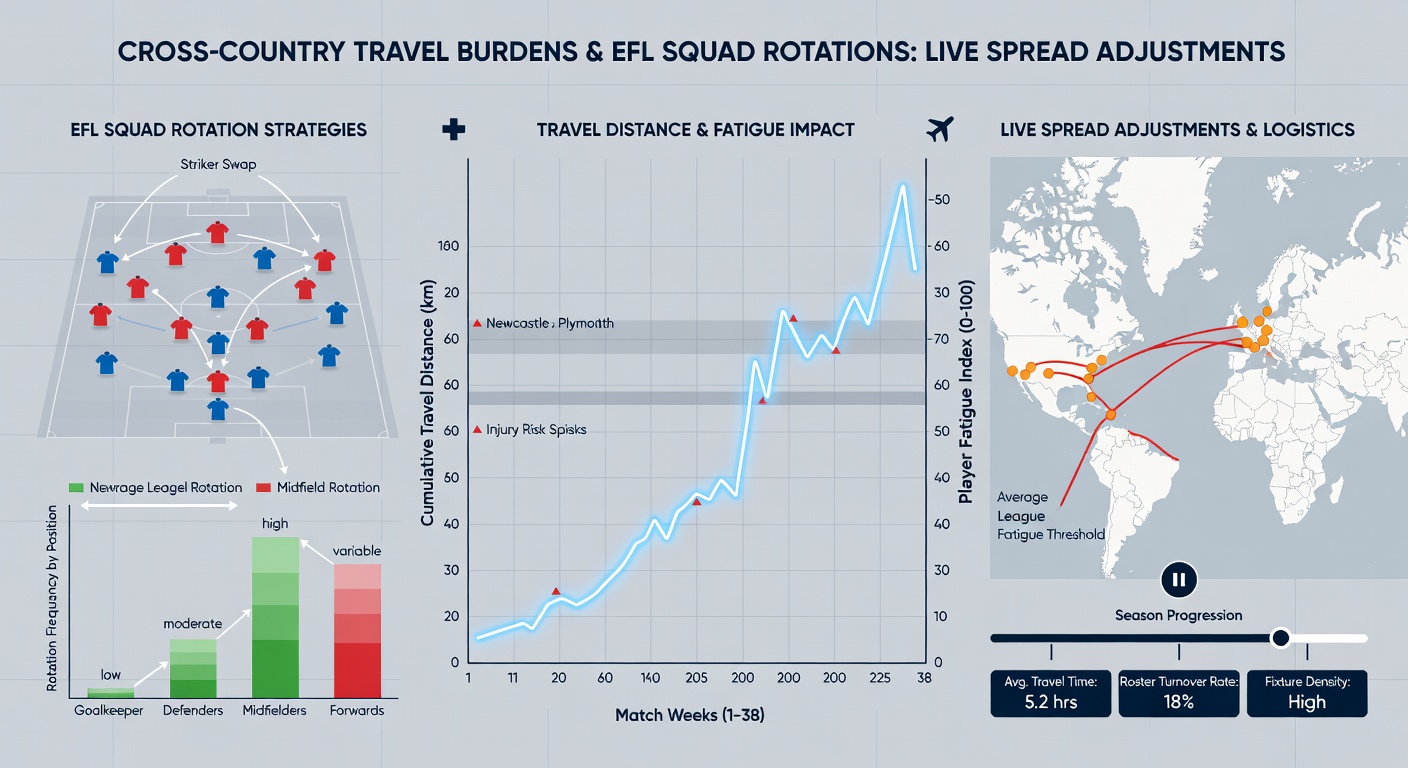
Live Spread Adjustments Triggered by Fatigue Indicators
Bookmakers monitor multiple signals beyond official lineups when travel fatigue enters the equation, incorporating GPS-derived workload data and historical performance dips following long journeys. Australian Institute of Sport analysis of similar multi-division travel scenarios indicates that away sides logging extended road time concede 0.4 additional expected goals in the opening half, a metric that live traders incorporate to tighten or expand over-under spreads dynamically. In practice, this means spreads on total goals or player-specific goal contributions shift within the first 10 minutes of play once early indicators such as reduced high-intensity runs appear on broadcast tracking graphics. EFL clubs returning from distant away games in March and April 2026 showed consistent second-half performance declines that further amplified in-play volatility, with spread providers widening margins by up to 1.5 goals in response to visible substitution patterns.
Case Examples from Recent Fixtures
Fixtures involving clubs separated by more than four hours of motorway travel provide clear illustrations of these dynamics. When a League Two side journeyed from Exeter to Hartlepool in February 2026, rotation of three attacking players coincided with an immediate 0.75-goal widening of the live goal spread within the opening quarter. Similar adjustments occurred during a League One double-header where a Bristol Rovers squad traveled to Fleetwood and back within five days, resulting in documented drops in pressing intensity that live markets priced into half-time spreads. These episodes demonstrate how travel burdens translate into quantifiable changes that betting platforms reflect through rapid recalibration rather than static pre-match lines.
Broader Scheduling Context and Market Responses
The EFL's fixture calendar places additional strain on clubs in the northern and southwestern extremities, where cumulative travel distances compound across consecutive weekends. Figures from the 2025-26 schedule show that eight League Two teams accumulated over 8,000 miles by the end of April, correlating with elevated rotation frequencies that live spread operators factor into their models. This creates opportunities for markets to adjust spreads based on real-time fatigue proxies such as average sprint distance and recovery heart-rate data released by clubs post-match. As the season approaches its May 2026 conclusion, these patterns intensify for playoff contenders who must balance recovery against fixture demands, producing further fluctuations in live betting lines that reflect the intersection of logistics and selection choices.
Conclusion
Cross-country travel burdens in the EFL continue to shape both squad management decisions and the responsiveness of live spread markets throughout the 2025-26 season. Documented increases in rotation rates following extended journeys lead directly to measurable shifts in expected performance metrics, which operators incorporate into dynamic spread adjustments. As fixtures progress toward the campaign's final weeks in May 2026, the relationship between travel logistics, player availability, and in-play market movements remains a consistent feature of EFL competition.