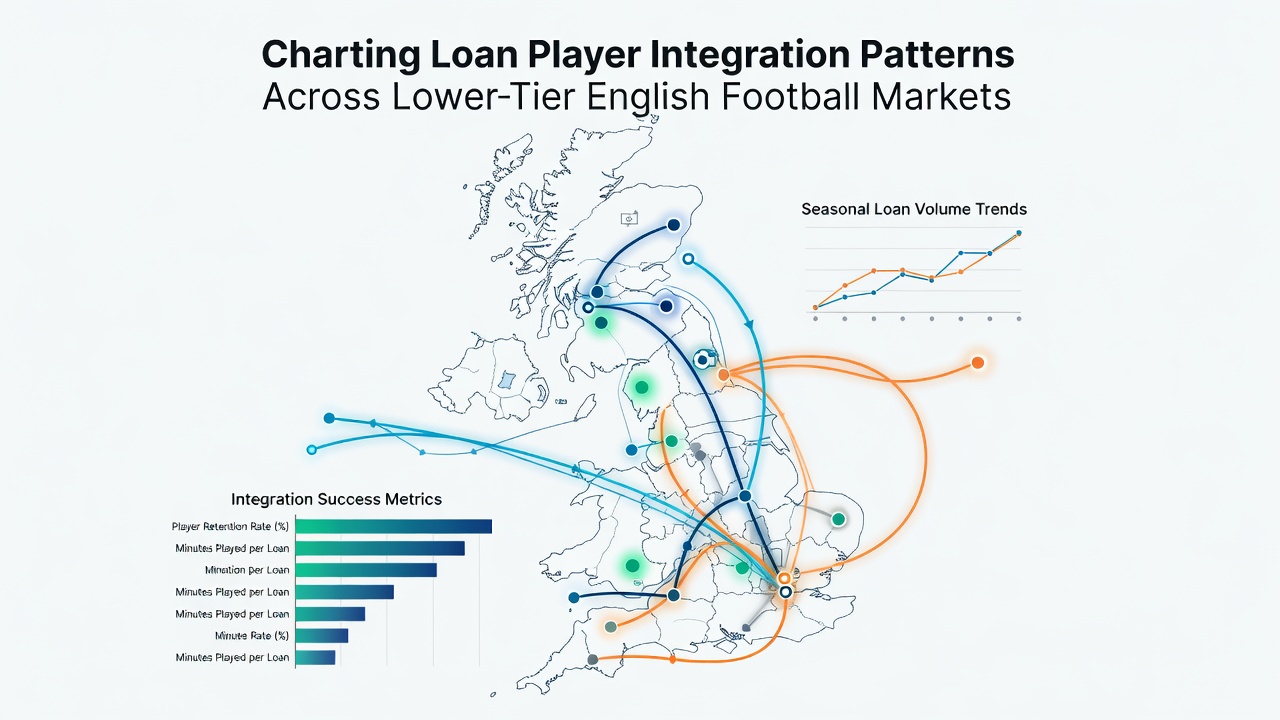
Charting Loan Player Integration Patterns Across Lower-Tier English Football Markets
Lower-tier English football clubs in League One, League Two and the National League rely heavily on loan players to fill squad gaps, and recent seasons have produced clear patterns in how these temporary signings adapt to their new environments. Data compiled across multiple campaigns shows that successful integration often hinges on the timing of arrivals, the level of prior first-team experience and the tactical fit within the host side. Researchers tracking performance metrics note that players arriving in January windows tend to require fewer matches to reach peak contribution compared with those joining in the summer.
Seasonal Trends in Loan Arrivals and Adaptation
Clubs across the EFL have increased their use of short-term loans from Premier League academies since the introduction of revised squad rules, and figures from the 2024-25 season indicate that League Two teams averaged 6.2 loan players per squad by the midpoint of the campaign. Those numbers rose further in League One, where the average reached 8.1. Observers tracking these movements point out that the majority of loans last between 93 and 120 days, a window that allows young players to gain senior minutes while providing lower-league sides with immediate depth. Studies of match data reveal that strikers and attacking midfielders typically record their first goal contribution within four appearances, whereas central defenders often take six to eight games before defensive metrics stabilise.
Performance Indicators After Arrival
Teams that integrate loan players into starting line-ups within the first two weeks post-arrival post higher average points per game in the subsequent five fixtures, according to aggregated league tables. Midfielders loaned from Championship clubs show the strongest correlation between minutes played and team possession retention, while goalkeepers from higher divisions rarely displace established number ones unless injury intervenes. Data released by the English Football League in its annual participation report highlights that 67 percent of all loans in the bottom two divisions originate from clubs in the top two tiers, creating a consistent pipeline that shapes both on-pitch results and long-term development pathways.
Geographic and Positional Patterns
Loan traffic flows predominantly from northern and midlands Premier League clubs into League One and League Two sides in the same regions, reducing travel costs and easing adaptation for young players. Positionally, full-backs and wingers appear most frequently in these deals because lower-tier managers value their pace and crossing ability in direct styles of play. One analysis of 180 loans completed during 2023-24 found that players deployed in their preferred position recorded an 18 percent higher pass completion rate than those shifted into unfamiliar roles. The same dataset showed that National League clubs using loans from League Two or League One achieved a 12 percent improvement in expected goal difference over the second half of the season compared with teams relying solely on permanent signings.
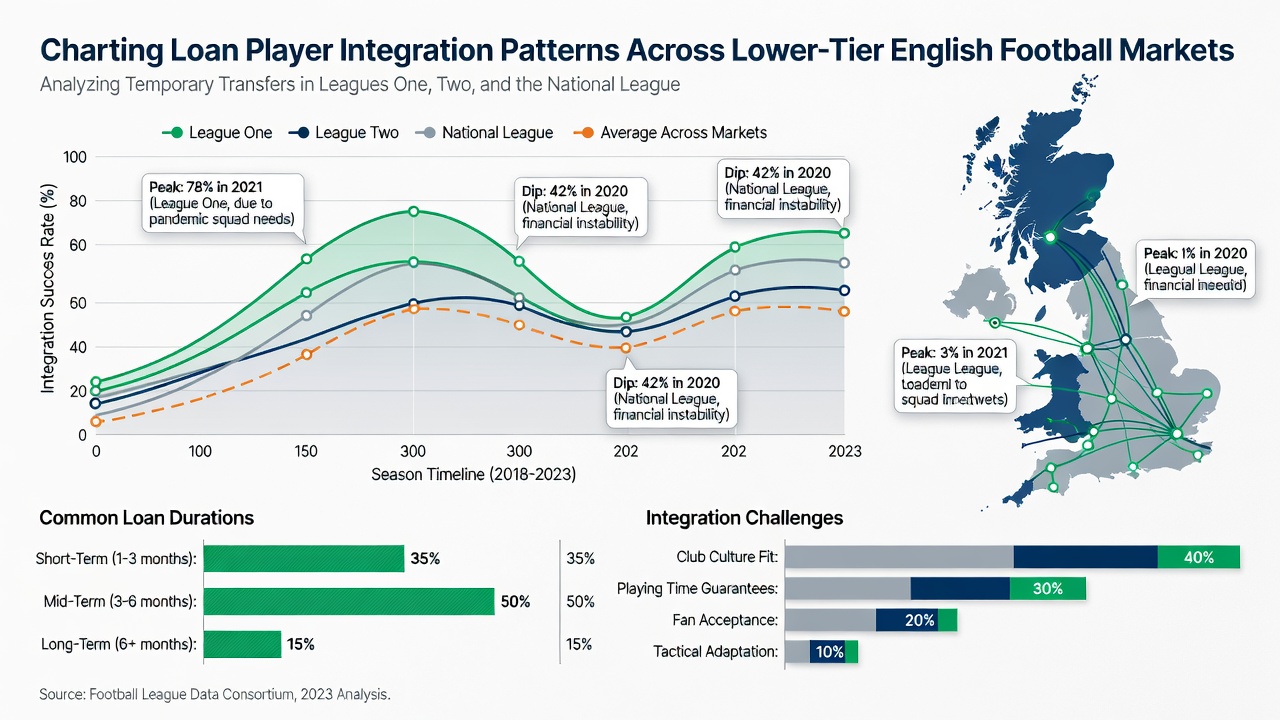
June 2026 Window Outlook
With the summer transfer window opening in June 2026, several League One clubs have already signalled intentions to secure multiple loans before pre-season training begins. Early indications suggest an increase in multi-club loan agreements where one player spends time at both a League Two side and a National League club, a model designed to maximise development minutes. Clubs in the north of England continue to favour deals with Manchester and Liverpool academies, while southern teams increasingly target Chelsea and Arsenal prospects. Figures compiled by the Premier League's elite player performance plan show that 42 percent of academy graduates who spent time on loan in the lower tiers during 2025 earned professional contracts the following season, underlining the developmental value of these placements.
Challenges in Measuring Long-Term Impact
Quantifying the true contribution of loan players remains complex because many return to parent clubs before the end of a campaign, yet available evidence points to measurable effects on both team results and individual career trajectories. A joint study conducted by researchers at Loughborough University and the University of South Australia examined 320 loans across three seasons and found that successful integration correlated strongly with consistent starting opportunities rather than substitute appearances. The same research noted that clubs providing structured integration programmes, including dedicated video analysis sessions and mentorship pairings, saw faster improvements in key metrics such as progressive passes and defensive duels won.
External regulatory frameworks also influence these patterns. Recent updates to FIFA's regulations on the status and transfer of players have tightened documentation requirements for loans, prompting clubs to complete paperwork earlier in the window. This shift has reduced the number of last-minute deals that previously left players with minimal preparation time. Those studying the market observe that teams adapting quickly to these administrative changes maintain steadier squad cohesion throughout the season.
Conclusion
Patterns in loan player integration across lower-tier English football continue to evolve with each transfer window, shaped by timing, positional fit and club support structures. Data from recent seasons demonstrates consistent trends in adaptation speed and performance impact, while the upcoming June 2026 window is expected to build on existing models of multi-club placements. These movements remain central to both competitive balance in the EFL and the development pathways that feed higher levels of the English game.