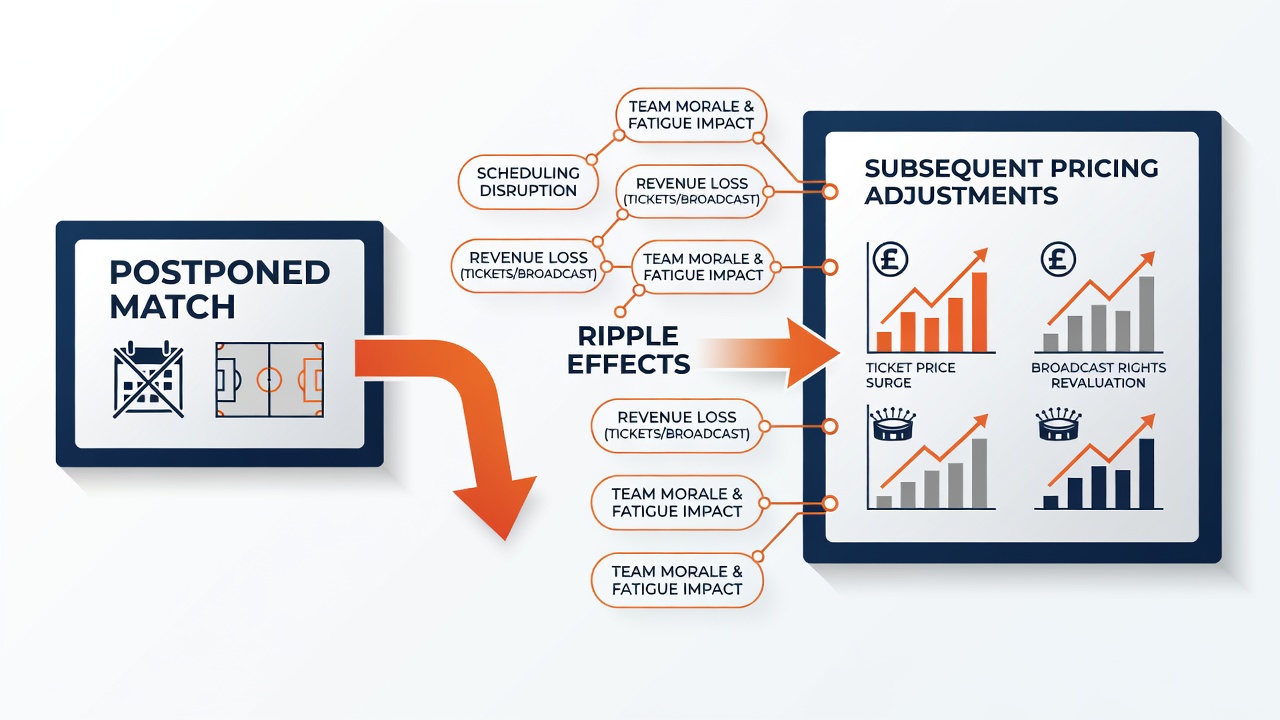
Decoding Postponed Match Ripple Effects on Subsequent English Division Pricing
Postponed matches in English football divisions trigger measurable adjustments in betting lines for rescheduled and subsequent fixtures across the Premier League, Championship, League One, and League Two, with data from multiple seasons showing consistent patterns in odds movement and market liquidity. These delays often stem from weather disruptions, fixture congestion, or cup replays, and they alter team preparation windows, travel schedules, and squad availability in ways that bookmakers track through proprietary models.
Primary Drivers Behind Match Postponements
Weather events such as heavy rain or frozen pitches account for a notable share of winter postponements, while international breaks and cup competitions create overlapping demands that force rescheduling into midweek slots. Observers note that clubs in the lower divisions experience higher rates of these disruptions because their grounds lack advanced drainage systems, and data from the English Football League indicates that League Two sides see roughly twice the postponement frequency of Premier League teams during peak winter months.
Immediate Market Reactions and Line Adjustments
Bookmakers respond to postponements by suspending markets on affected matches and then reopening lines once new dates are confirmed, with odds reflecting revised rest periods and venue changes. When a fixture shifts from a Saturday to a Tuesday, teams that benefit from extra recovery time often see their implied probabilities improve by 3 to 6 percent according to historical pricing records, while the opposing side's price lengthens if they face a compressed schedule. Those who monitor these shifts across multiple bookmakers report that early liquidity tends to favor sides with deeper squads capable of rotating players without significant performance drops.
Carryover Effects on Following Fixtures
Rescheduled games rarely exist in isolation, and the ripple reaches the next set of league matches because altered recovery cycles influence player availability and tactical preparation. A side that plays twice in four days after a postponement frequently shows elevated goal concession rates in the immediate follow-up fixture, a pattern documented in performance databases maintained by league statisticians. Pricing for those subsequent matches incorporates these fatigue indicators, and lines move accordingly once team news and training reports become public.
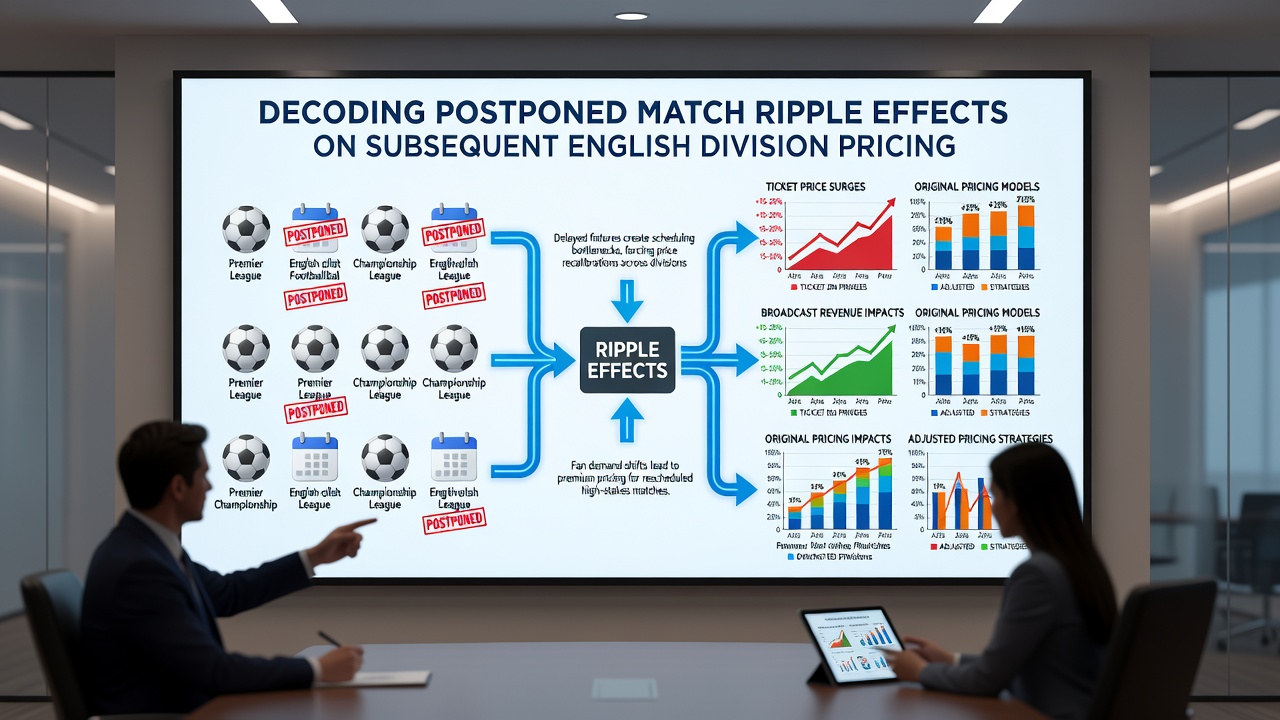
August 2026 provides a clear illustration of this dynamic. Several Championship and League One matches were postponed due to extreme heat advisories early in the month, pushing fixtures into the following midweek and compressing the schedule ahead of the first international break. Pricing data from that period showed clear movement in the lines for the next round of league games, particularly for teams required to travel long distances between rescheduled and regular fixtures.
Division-Specific Pricing Variations
Premier League markets absorb postponement news with relatively modest volatility because of greater squad depth and higher betting volumes that stabilize prices quickly. In contrast, Championship and League One lines exhibit larger swings when key players face uncertain availability after a delayed match, since smaller squads leave less margin for rotation. Researchers at the University of Manchester have examined these tier differences in a sports economics paper, noting that lower-division pricing reflects greater sensitivity to fixture pile-ups.
Tracking Liquidity and Value Opportunities
Market liquidity drops immediately after a postponement announcement and recovers once the new date is set, creating windows where early movers can find discrepancies between bookmakers. Those monitoring multiple operators observe that some firms adjust faster than others on the back of internal data feeds, and the resulting gaps narrow within 24 to 48 hours as additional information emerges. Figures from industry reports compiled by the European Gaming and Betting Association highlight how these short-term inefficiencies appear more frequently in lower-league divisions where trading volumes remain lighter.
Conclusion
Postponed matches generate predictable downstream effects on English division pricing through changes in rest, travel, and squad management, and these patterns repeat across seasons with measurable consistency. Bookmakers refine their models to account for such variables, while market participants follow the flow of information from fixture updates to team news. The August 2026 examples underscore how external factors like weather continue to influence scheduling and, by extension, the odds that follow.