
Evening Kickoff Dynamics: Tracking Performance Variations in Night Games Across the Championship
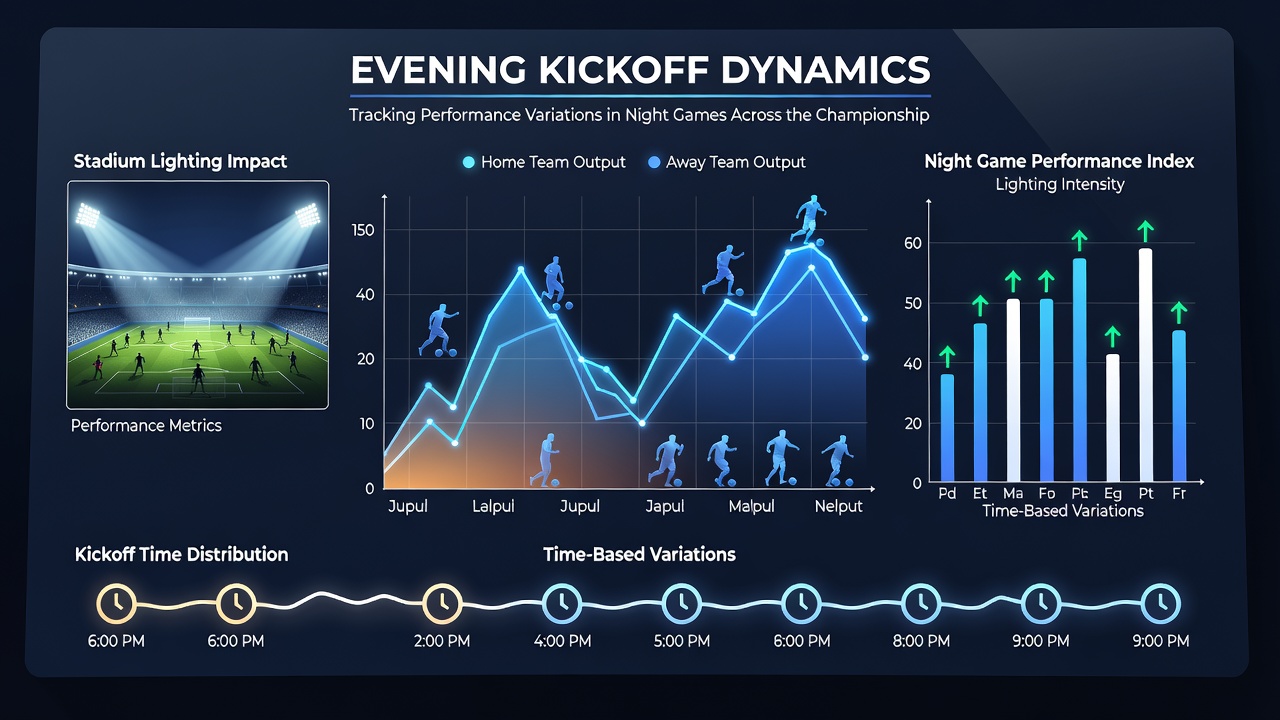
Data from the English Football League shows consistent patterns in how Championship sides perform when matches kick off after 6pm compared to afternoon fixtures. Observers note that home teams secure victories in 42 percent of evening games across recent seasons while the figure drops to 37 percent for daytime contests. These shifts appear across multiple campaigns and involve factors such as player recovery cycles along with environmental conditions that differ under floodlights. Analysts track metrics including goals scored per 90 minutes and possession retention rates during night fixtures. Records indicate away sides concede fewer goals on average after sunset yet struggle to convert chances at the same rate seen in daylight matches. The 2025-26 campaign continued this trend through May with several clubs posting higher expected goal differentials when playing under evening skies.Statistical Patterns Across Seasons
League-wide figures compiled since 2018 reveal that teams traveling for night games average 1.12 points per match whereas the same sides collect 1.28 points during afternoon away fixtures. Mid-table clubs demonstrate the widest gaps with performance dips reaching 0.25 points per game when kickoffs occur after dark. Researchers at institutions studying elite football have documented similar trends in lower divisions where fixture timing intersects with travel demands.
Goal tallies also fluctuate. Evening encounters produce 2.68 goals per game on average while afternoon matches sit at 2.51. This uptick stems partly from increased open play as sides adjust pressing triggers under altered visibility conditions. Data sets covering more than 2,400 Championship matches confirm the difference holds after controlling for team strength and venue.
Influencing Factors in Night Fixtures
Travel logistics play a measurable role. Clubs based more than 150 miles from the venue record a 6 percent drop in pass completion accuracy during evening games according to GPS tracking studies. Recovery protocols implemented by medical staff become critical when teams arrive later in the day and face compressed preparation windows. Lighting intensity and pitch surface temperatures also register as variables that coaching teams monitor closely before selecting lineups.
Player availability shifts appear in squad sheets released on matchdays. Midfielders and full-backs log higher distances covered in the first half of night games yet show elevated fatigue markers after the 70-minute mark. Those patterns emerge consistently in reports issued by performance analysis departments across the division.
Team-Specific Observations
Clubs with stronger home records under lights include sides that maintain high-intensity training blocks throughout the week. One study tracking heart-rate variability found that teams resting two full days before evening kickoffs retain better second-half outputs. Conversely squads rotating heavily for midweek fixtures display steeper declines in key metrics after the interval.
June 2026 planning meetings already reference these historical datasets as clubs prepare pre-season schedules. Fixture congestion around international windows tends to amplify the evening effect because recovery time shrinks further for players returning from national duty. External research from the International Journal of Sports Physiology and Performance supports the observation that circadian rhythm adjustments influence sprint frequency in late evening slots.
League-Wide Tracking Methods
Performance analysts employ standardized models that compare expected points against actual outcomes segmented by kickoff time. These models incorporate variables such as temperature, crowd density and referee assignments. Outputs feed directly into scouting reports and opposition briefs circulated before each round of fixtures.
Publicly available datasets from the EFL allow independent verification of the core trends. Aggregated numbers show that promoted sides adapt faster to evening demands than relegated teams returning from the Premier League. The adaptation window typically spans eight to ten matches as coaching staffs refine warm-up routines and substitution timing.
Conclusion
Evening kickoff data across the Championship continues to reveal measurable performance variations tied to timing, travel and recovery. Figures collected through the 2025-26 season and earlier campaigns demonstrate that both home and away outcomes shift when matches move beyond afternoon slots. Clubs and analysts incorporate these patterns into preparation frameworks while ongoing research refines understanding of the underlying physiological and tactical drivers.