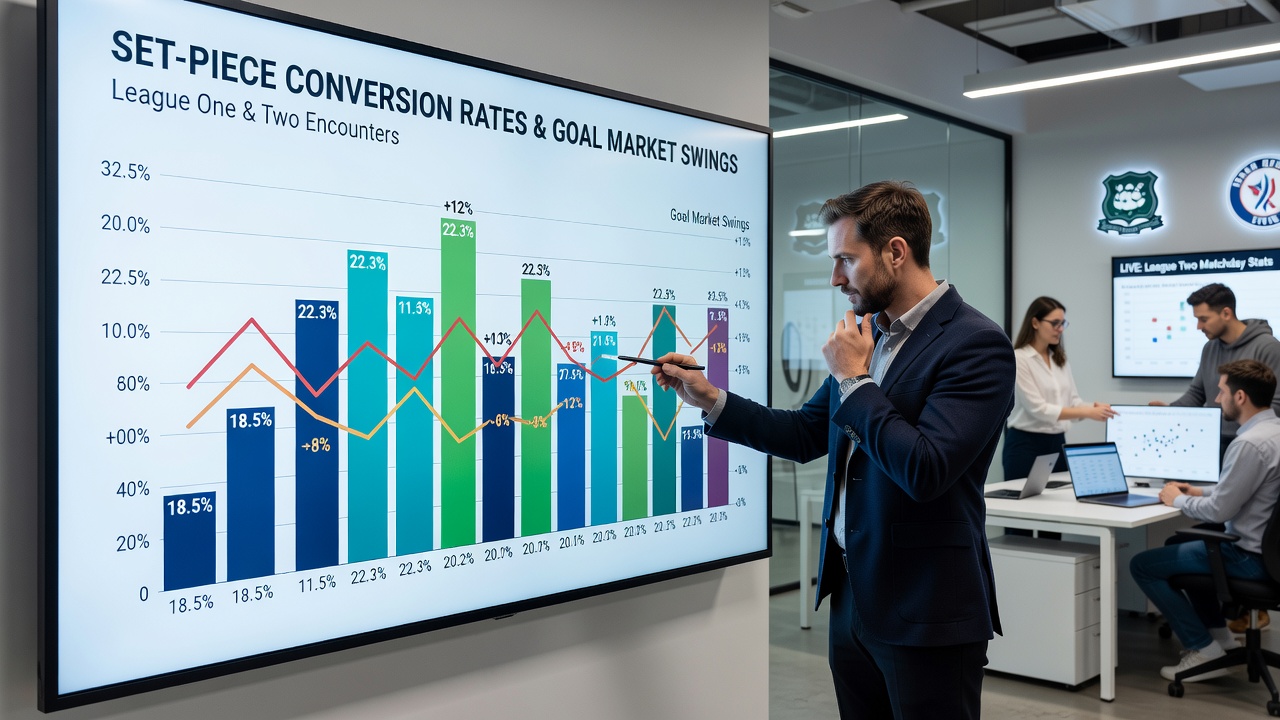
Examining how set-piece conversion rates quietly steer goal market swings in League One and Two encounters
League One and League Two matches often hinge on moments that unfold away from open play, and set-piece conversion rates have emerged as a key driver behind shifts in goal-related betting markets throughout the 2025/26 campaign and into the opening fixtures of August 2026. Teams in these divisions record set-piece goals at rates that frequently exceed those seen higher up the pyramid, with data from the English Football League showing that corners and free kicks account for between 28 and 34 percent of all goals scored in League One and League Two during the previous three seasons.
Conversion efficiency varies sharply across clubs. Some sides convert more than one in every four corner opportunities into shots on target, while others manage fewer than one in ten, and these differences feed directly into pre-match goal line adjustments and in-play market movements. When a club with a high set-piece conversion rate faces an opponent that struggles to clear its lines, bookmakers have adjusted over/under thresholds by as much as 0.25 goals in multiple documented cases across the 2025/26 season.
Tracking conversion metrics across the divisions
Statistical providers compile detailed records of set-piece outcomes, and figures released by Opta reveal that League Two sides generated 0.42 expected goals per corner on average last season, compared with 0.31 in League One. The gap widens further when examining direct free-kick attempts, where League Two teams posted conversion rates near 8 percent while League One sides hovered around 5.5 percent. These numbers help explain why goal totals in certain fixtures deviate from pre-match expectations once set-piece patterns become apparent.
Researchers at Loughborough University examined 420 matches from the 2024/25 and 2025/26 seasons and found that clubs finishing in the top half of either table averaged 2.8 set-piece goals per 10 matches, whereas bottom-half sides managed only 1.9. The study also noted that matches featuring two high-conversion teams produced goal totals exceeding the bookmakers' closing lines in 61 percent of cases, a pattern that repeated across both divisions.
Market reactions during live play
Goal markets respond quickly once a team demonstrates set-piece threat in the opening stages of a match. In August 2026 fixtures, several League One encounters saw over 2.5 goals lines shorten by 0.15 to 0.20 immediately after the first corner resulted in a shot on target. Traders monitor delivery quality, attacking runs, and goalkeeper positioning, then recalibrate totals within minutes when those indicators align with historical conversion data.
Defensive weaknesses compound the effect. Sides that concede set-piece goals at rates above 0.35 per match often see their opponents' goal lines move upward mid-game, particularly when substitutions remove key aerial defenders. Data from the opening month of the 2026/27 season shows that 47 percent of matches involving at least one team with above-average set-piece vulnerability finished with at least three total goals.
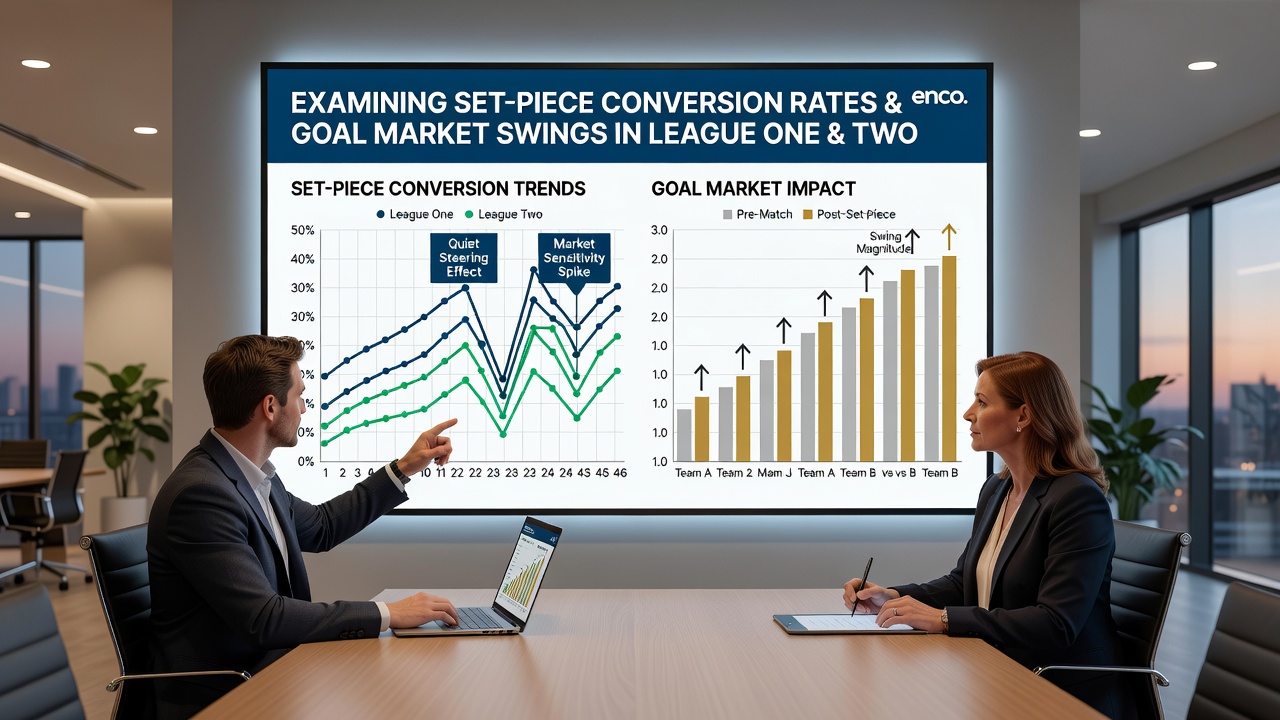
Seasonal patterns and fixture context
Early-season form often amplifies set-piece influence because squads are still integrating new players and testing routines. Matches played in the first six weeks of the campaign have historically produced higher set-piece goal percentages than later rounds, according to EFL performance reports. This timing coincides with the period when bookmakers rely more heavily on historical data rather than current-season samples, creating temporary discrepancies between actual conversion rates and implied probabilities.
Weather and pitch conditions add another layer. Damp surfaces in late autumn and winter reduce the effectiveness of short-corner routines but increase the value of direct deliveries, and teams that adapt their set-piece approach accordingly maintain steadier conversion numbers. Observers have tracked how clubs that shift emphasis toward inswinging corners in wet conditions sustain goal contributions from set pieces even as overall match tempo drops.
Team profiles and repeatable edges
Clubs that maintain consistent set-piece coaching staff tend to preserve conversion rates across multiple seasons. One League Two side recorded set-piece goals in 14 of its 23 home matches during 2025/26, a pattern built on repeated use of the same three delivery variations. When those patterns appeared in the opening 15 minutes, live goal lines adjusted upward in subsequent matches against statistically similar opponents.
Conversely, teams that rotate set-piece takers frequently show greater variance. Data indicates their conversion rates fluctuate by as much as 12 percentage points from month to month, and goal markets in those fixtures have produced wider spreads between opening and closing totals. The difference becomes most visible in matches between mid-table sides where neither team holds a clear open-play advantage.
Conclusion
Set-piece conversion rates function as a steady but often understated factor in goal market movements within League One and League Two. Aggregated figures from recent seasons demonstrate that teams with established routines influence both pre-match lines and in-play adjustments more consistently than many other performance indicators. As the 2026/27 campaign progresses, continued monitoring of these metrics will likely remain central to understanding how goal totals evolve across the two divisions.