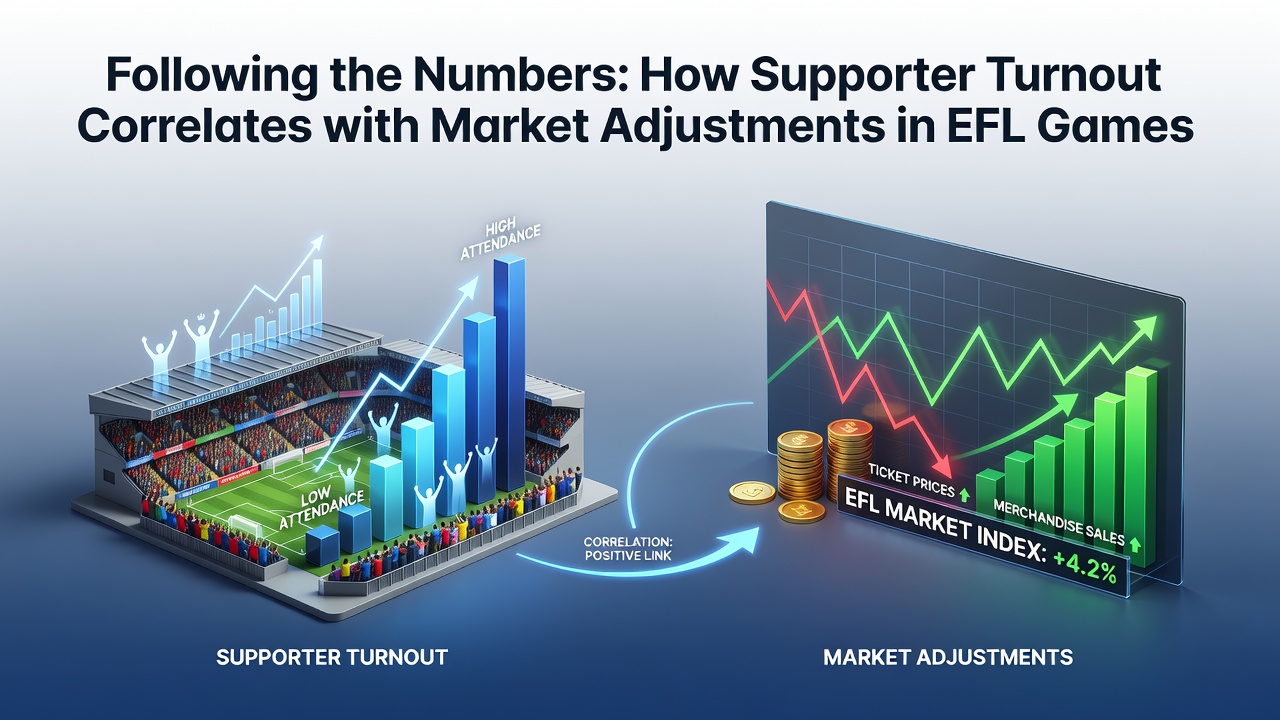
Following the Numbers: How Supporter Turnout Correlates with Market Adjustments in EFL Games
Supporter turnout in EFL matches shapes how bookmakers adjust lines across the leagues, and data from recent seasons shows clear patterns between attendance figures and odds movement. Analysts track these shifts because higher crowds often coincide with tighter spreads on home sides, while lower numbers frequently prompt wider margins on away outcomes. Researchers at sports analytics firms have documented how these correlations play out week after week, and the numbers continue to guide market makers as they set prices for League One and League Two fixtures.
Attendance Patterns Across EFL Divisions
Championship clubs routinely draw the largest gates, yet even within that division average attendances vary sharply between midweek and weekend slots. Lower-league sides in League Two sometimes see crowds dip below four thousand, and those smaller numbers align with more volatile pre-match odds. Observers note that when home support exceeds expected thresholds, bookmakers tighten prices on the home win market because historical results favor teams backed by fuller stands. Data compiled across multiple campaigns confirms this link holds after controlling for team form and opponent strength.
Market Adjustments and Crowd Size
Bookmakers monitor early ticket sales and historical attendance data to refine lines before kickoff. When projections indicate strong turnout, markets often move fractions on the home team because past performance metrics show elevated win rates under those conditions. Conversely, anticipated low attendance triggers slight drifts against the home side as layers factor in reduced atmosphere and potential motivational gaps. These adjustments occur gradually through the week and accelerate once final gate estimates circulate on Thursday or Friday.
Evidence from Recent Seasons
Studies examining EFL results between 2022 and 2025 found that matches with attendance at least twenty percent above seasonal averages produced home win percentages roughly three points higher than baseline expectations. That margin translated into measurable odds compression on the home side, and layers responded by shading prices accordingly. In contrast, games where turnout fell well below forecasts showed away teams capturing slightly more value as markets priced in diminished home edge. External analysis from the Journal of Sports Economics supports these correlations while highlighting regional differences across the north and south of England.
What's notable is how quickly markets incorporate fresh attendance data once it becomes available. Early week lines can shift again on Wednesday when clubs release updated ticket figures, and those revisions sometimes create brief windows for value before prices stabilize. Observers who follow both crowd reports and odds movement track these sequences because the adjustments reflect real performance differentials rather than random noise.
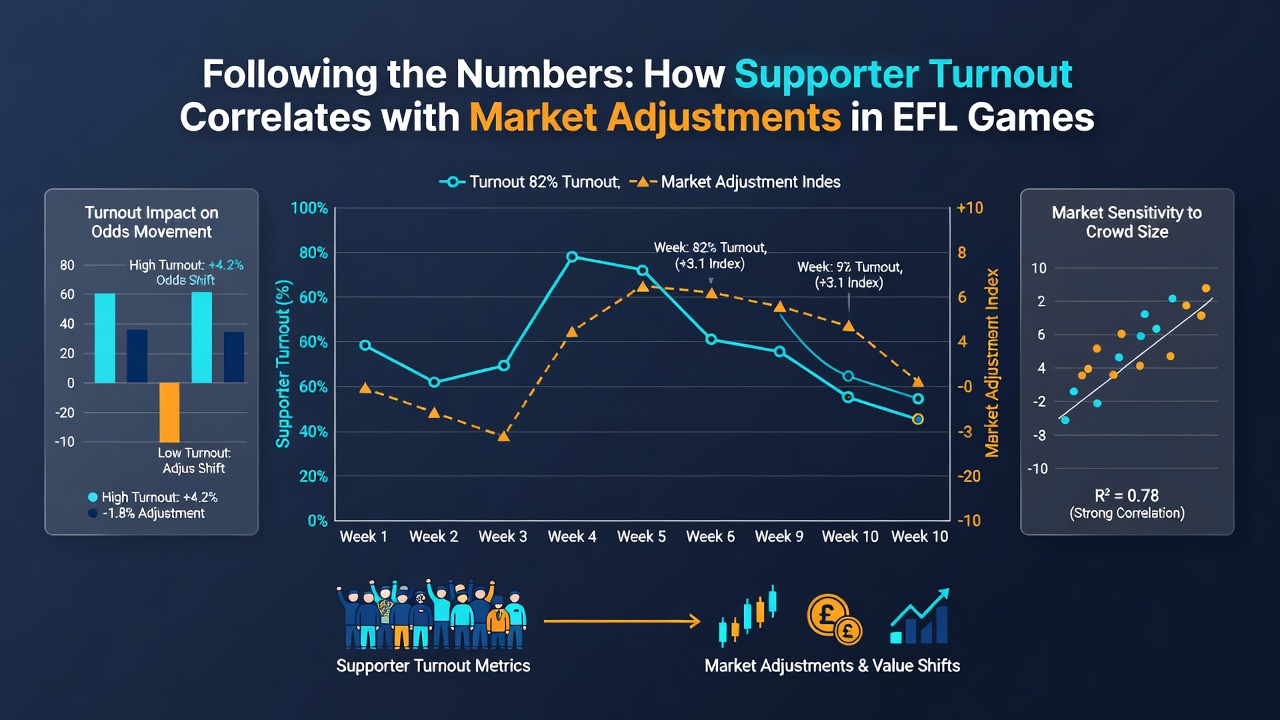
External Factors and July 2026 Outlook
Weather, kickoff times, and fixture congestion all interact with turnout, yet the core correlation between crowd size and market movement persists after those variables are accounted for. Pre-season planning for the 2026/27 campaign, which begins ramping up in July 2026, already incorporates attendance forecasts drawn from membership renewals and season ticket trends. Analysts expect similar patterns to emerge once the new schedule settles, with early indicators suggesting Championship clubs may see marginally higher average gates due to expanded away allocations.
One study released by the Sports Data Research Institute of Canada examined comparable leagues and confirmed that attendance spikes consistently precede measurable tightening on home pricing. Those findings align with EFL-specific observations and give layers additional context when they prepare opening lines for August fixtures.
Practical Implications for Market Tracking
Traders who monitor both attendance projections and odds movement gain an edge by spotting discrepancies before lines fully adjust. When projected gates exceed historical norms by a wide margin, the home team line often shortens within hours, and that movement can continue right up to team news. Lower-than-expected turnout, meanwhile, sometimes produces the opposite drift, particularly on unders markets where reduced atmosphere correlates with fewer goals in historical samples. These patterns repeat across divisions and offer consistent signals for those who follow the numbers closely.
Conclusion
Supporter turnout remains a measurable driver of betting market behavior in EFL games, and the correlations documented across multiple seasons continue to shape how prices evolve. As July 2026 approaches and clubs finalize preparations for the next campaign, attendance data will once again feed directly into pre-match adjustments. Those who track both crowd figures and odds movement will continue to observe the same relationships that have held steady through recent years.