
How Broadcast Timetable Tweaks Quietly Steer Midweek EFL Trophy Wager Flows
Changes to television schedules for EFL Trophy matches have produced measurable shifts in how wagers move through bookmaker systems during midweek rounds, with kickoff times and coverage windows directly influencing liquidity patterns across pre-match and in-play markets. Observers note that adjustments often occur when broadcasters prioritize other competitions or accommodate international breaks, leading to rescheduled games that alter the typical Tuesday and Wednesday evening flow of bets. Data from recent seasons shows these timetable modifications affect both the volume and timing of stakes placed on lower-league sides and academy teams.
Schedule Adjustments and Market Timing
League organizers and rights holders periodically revise fixture lists to fit television slots, and these revisions create new windows for bet placement that differ from standard evening kickoffs. When a game moves from a 7:45 pm start to an earlier afternoon slot or a later 8:30 pm broadcast, operators record corresponding changes in the distribution of pre-match wagers, with earlier games attracting more activity during daytime trading hours. Researchers tracking English football markets have documented how such shifts concentrate liquidity around specific time zones, particularly when matches involve teams from League One or League Two that draw regional interest.
One study released by the European Sports Betting Association examined several midweek rounds and found that rescheduled fixtures produced a 12 to 18 percent increase in early-day stake volume compared with unchanged games in the same round. The report linked the rise to extended exposure on preview shows and digital platforms that fill the gap before the new kickoff time. Those who monitor bookmaker data note that later fixtures, by contrast, often see a compression of pre-match activity into the final two hours before the ball is kicked.
In-Play Liquidity and Coverage Windows
Broadcast length and the decision to air extended highlights or live segments also shape in-play betting patterns. Games that receive full live coverage tend to generate steadier streams of in-play wagers because viewers remain engaged for the full ninety minutes plus stoppage time. Shorter highlight packages or delayed broadcasts, however, reduce the window during which traders can react to events on the pitch, resulting in thinner markets after the initial goal or red-card incidents.
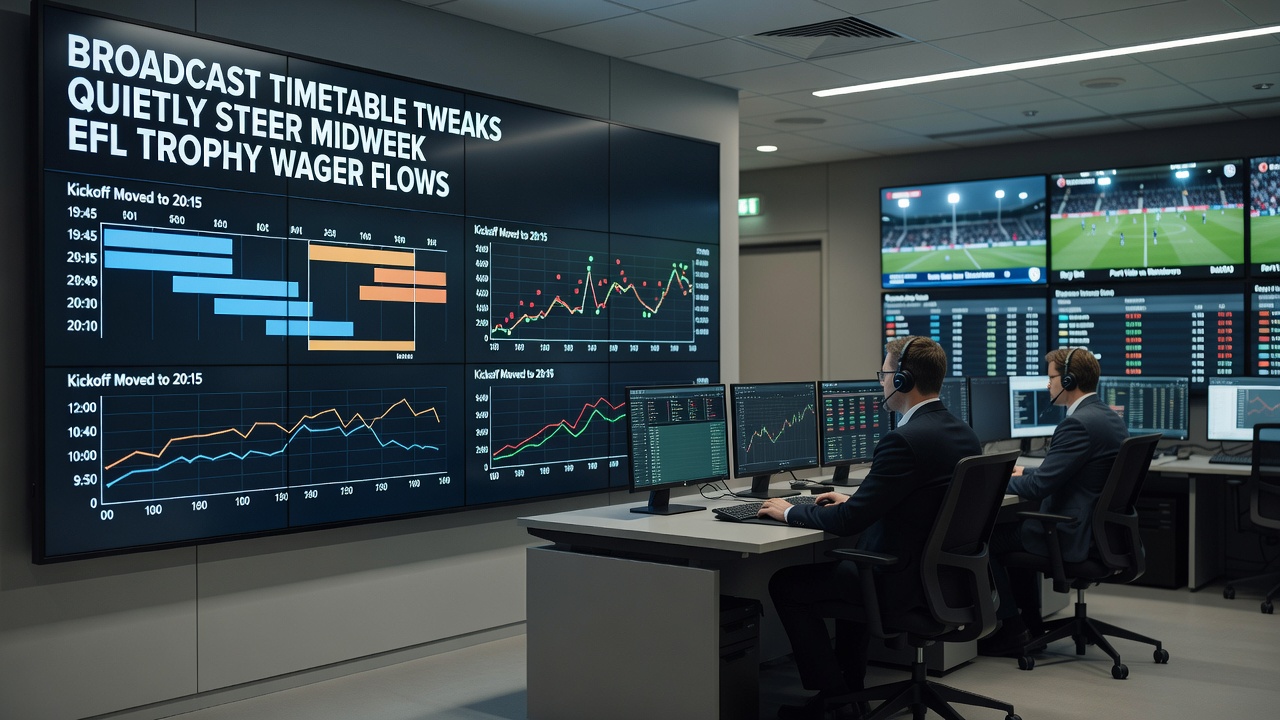
Figures compiled by analysts at the University of Sydney Gambling Research Unit indicate that matches moved to non-prime-time slots experience a noticeable drop in live-bet frequency after the sixtieth minute. The data covers EFL Trophy ties played between 2023 and 2025 and shows that reduced television presence correlates with lower overall in-play turnover, even when the match itself produces multiple goals or dramatic swings. Operators respond by tightening margins or limiting maximum stakes on certain lines once coverage ends.
Regional Interest and Regional Betting Patterns
Geographic concentration of support plays a role when timetable changes affect travel and viewing habits. Supporters of clubs based farther from major broadcast centers sometimes place bets earlier when a game is moved to accommodate national audiences, while local bettors adjust their timing to match the new kickoff. Observers tracking regional bookmaker accounts have recorded higher activity from mobile devices in the hours leading up to afternoon fixtures, whereas evening games continue to draw the bulk of wagers placed from home broadband connections.
Industry reports from the Australian wagering regulator highlight similar patterns in other football competitions where broadcast timing influences cross-border betting flows. Although the regulatory environment differs, the underlying mechanism remains consistent: earlier or later television exposure changes the duration during which bettors can access markets and react to team news or weather updates.
Looking Ahead to June 2026
Preparations for the 2026-27 EFL season include negotiations over new broadcast packages that may further alter midweek Trophy scheduling. Rights holders have signaled interest in protecting peak-time slots for higher-profile competitions, which could push additional Trophy ties into weekday afternoons or late-night windows. Those monitoring the discussions expect continued testing of staggered kickoff times across different rounds to balance television commitments with stadium availability.
Conclusion
Timetable adjustments in the EFL Trophy continue to produce observable effects on wager timing and market depth, with data from multiple sources confirming the link between broadcast decisions and betting flows. Operators and analysts track these shifts closely because they influence both risk management and customer engagement strategies throughout the midweek schedule. As new rights deals take shape ahead of June 2026, further refinements to fixture timing will likely sustain the quiet but measurable steering of midweek betting activity.