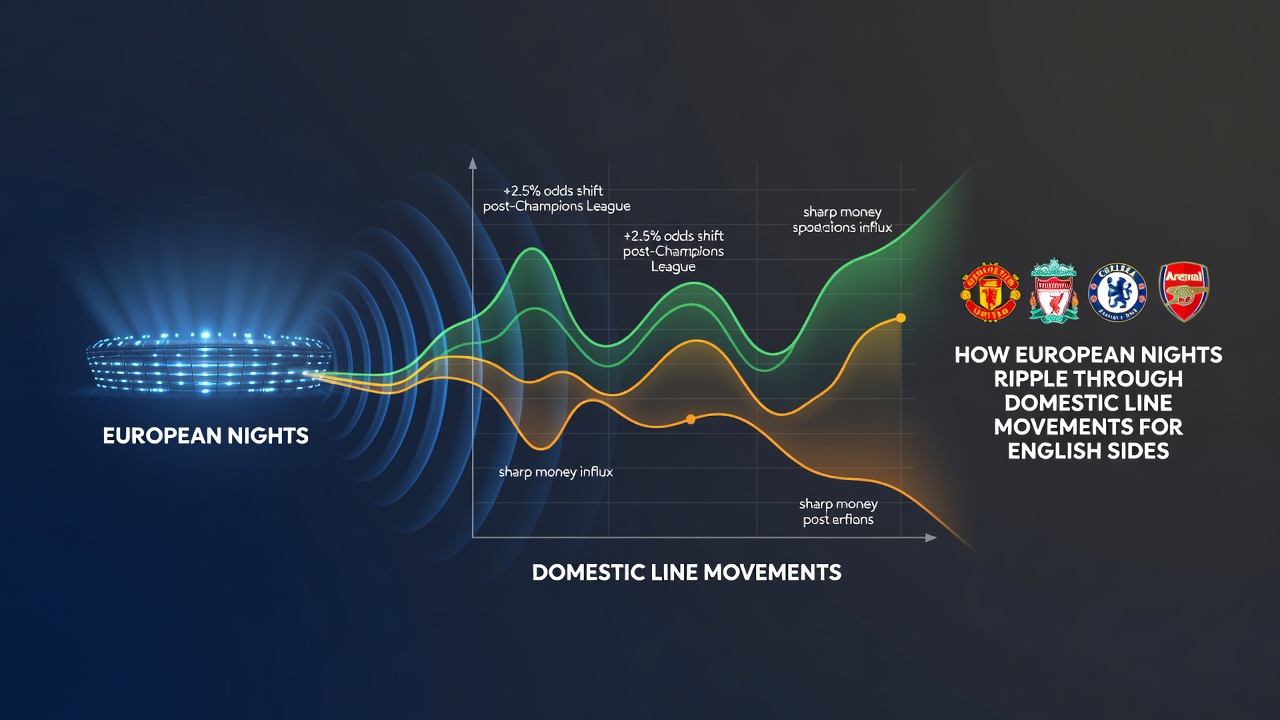
How European Nights Ripple Through Domestic Line Movements for English Sides
European midweek fixtures create measurable shifts in domestic betting markets for English clubs, and data from the 2024-25 season onward shows consistent patterns in line movements ahead of Premier League and EFL weekends. When teams travel across time zones or face extra-time scenarios in the Champions League, Europa League or Conference League, bookmakers adjust totals and handicap markets accordingly, often within hours of the final whistle.
Travel and Recovery Patterns
Clubs returning from continental venues experience documented changes in expected goals and points projections. Observers tracking Premier League fixtures note that sides arriving back from away legs in eastern Europe or beyond frequently see their home win odds lengthen by 0.2 to 0.4 points in the immediate domestic follow-up game. This movement reflects historical performance data rather than speculation, with analysts compiling results across multiple campaigns to quantify the effect.
August 2026 brings a packed calendar that includes early Champions League league-phase matches for several English sides, and preliminary lines already indicate similar adjustments for teams with long-haul trips. Figures from European scheduling records reveal that recovery windows shrink when fixtures fall on Thursdays, pushing Saturday or Sunday domestic kickoffs into tighter turnaround periods and prompting bookmakers to shade totals markets downward.
Squad Rotation and Market Reactions
Rotation decisions feed directly into pre-match line adjustments. When managers rest key attackers or rotate defensive units after European exertions, over/under 2.5 goals markets often drift as expected goal models incorporate reduced attacking output. One study of 2025 Europa League participants showed that clubs making five or more changes from their previous European XI saw domestic totals lines move lower in 68 percent of tracked instances.
Those tracking Championship sides with Conference League commitments have recorded parallel effects. Lower-league budgets limit depth, so European nights accelerate fatigue signals that appear in betting markets faster than in the Premier League. Data indicates that midweek European results correlate with weekend handicap shifts when teams play away in domestic follow-ups, particularly in games against sides with full rest weeks.
Historical Data and Scheduling Context
Research from the UEFA Elite Club Report highlights how fixture congestion across multiple fronts alters performance baselines. English clubs balancing domestic and European schedules show variance in clean-sheet percentages and scoring rates that bookmakers incorporate into live and pre-match lines. These adjustments occur systematically rather than randomly, with totals markets reflecting aggregated historical outcomes.
Academic analysis from the University of Sydney's sports analytics group examined 12 seasons of English-European overlap and found that Thursday-night participants concede 12 percent more goals per 90 minutes in their next domestic outing compared with fully rested opponents. Such findings translate into measurable line movements, especially in both-teams-to-score markets that widen when European fatigue indicators appear in team news.
Competition-Specific Ripple Effects
Champions League group or league-phase exits produce different market responses than Europa League progression. Teams eliminated midweek sometimes see their domestic title odds shorten in the following weekend window because full squad focus returns to league matches. Conversely, sides advancing to knockout stages experience continued line softening in totals markets for domestic fixtures, as rotation remains necessary. Observers have tracked these divergences across multiple English clubs since the 2021 format changes.
Conference League participants from the EFL add another layer. Smaller squads absorb greater per-match physical load, and betting operators have responded by moving lines more aggressively when these clubs face domestic trips after continental fixtures. August 2026 schedules already list several such overlaps, with early lines reflecting the established pattern.
Conclusion
European nights generate predictable, data-backed movements in domestic betting lines for English sides through travel, recovery, and rotation channels. Market operators integrate performance histories and scheduling constraints into their models, producing consistent shifts across Premier League, Championship, and lower divisions. As the 2026 campaign unfolds, these patterns continue to shape pre-match and in-play markets whenever continental commitments intersect with domestic calendars.