How Synthetic Pitch Surfaces Alter Performance Metrics Across England's Domestic Competitions
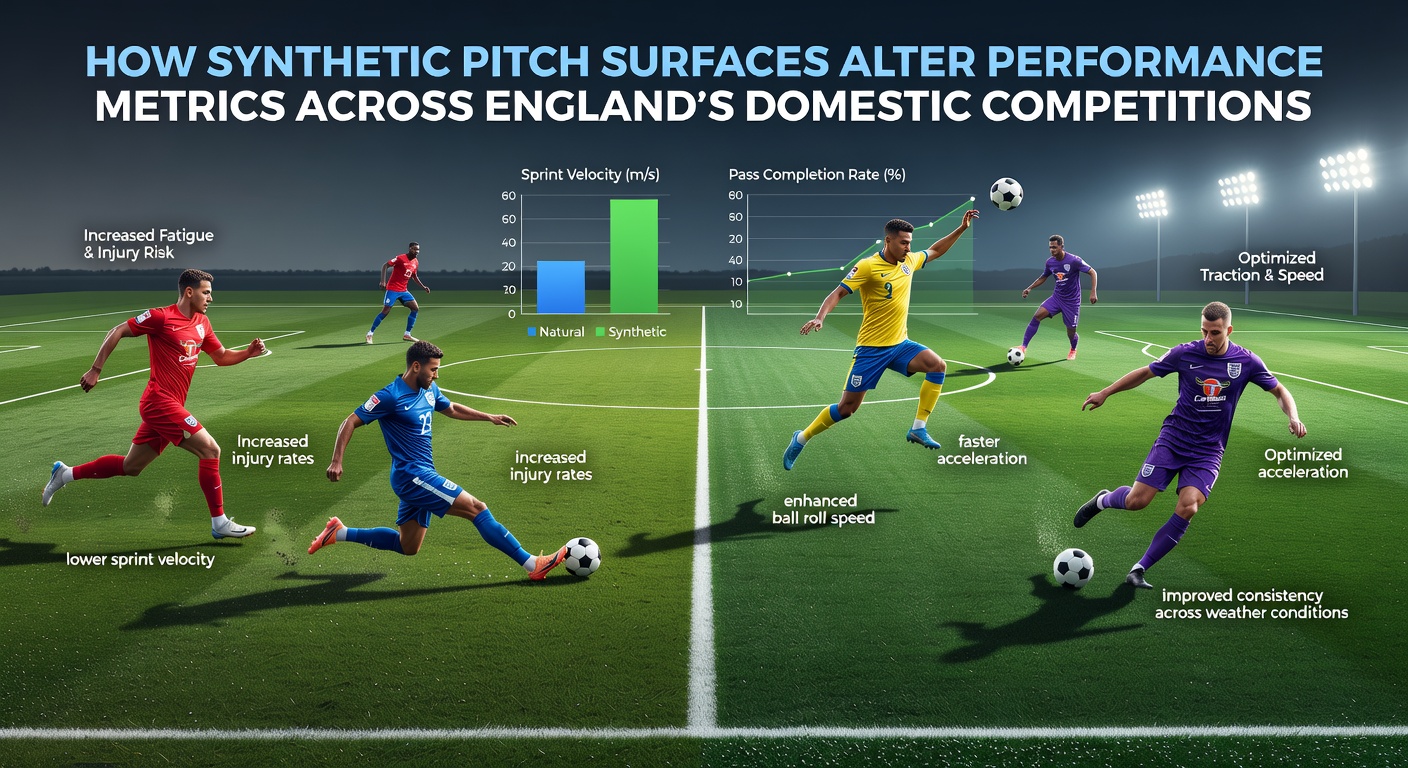
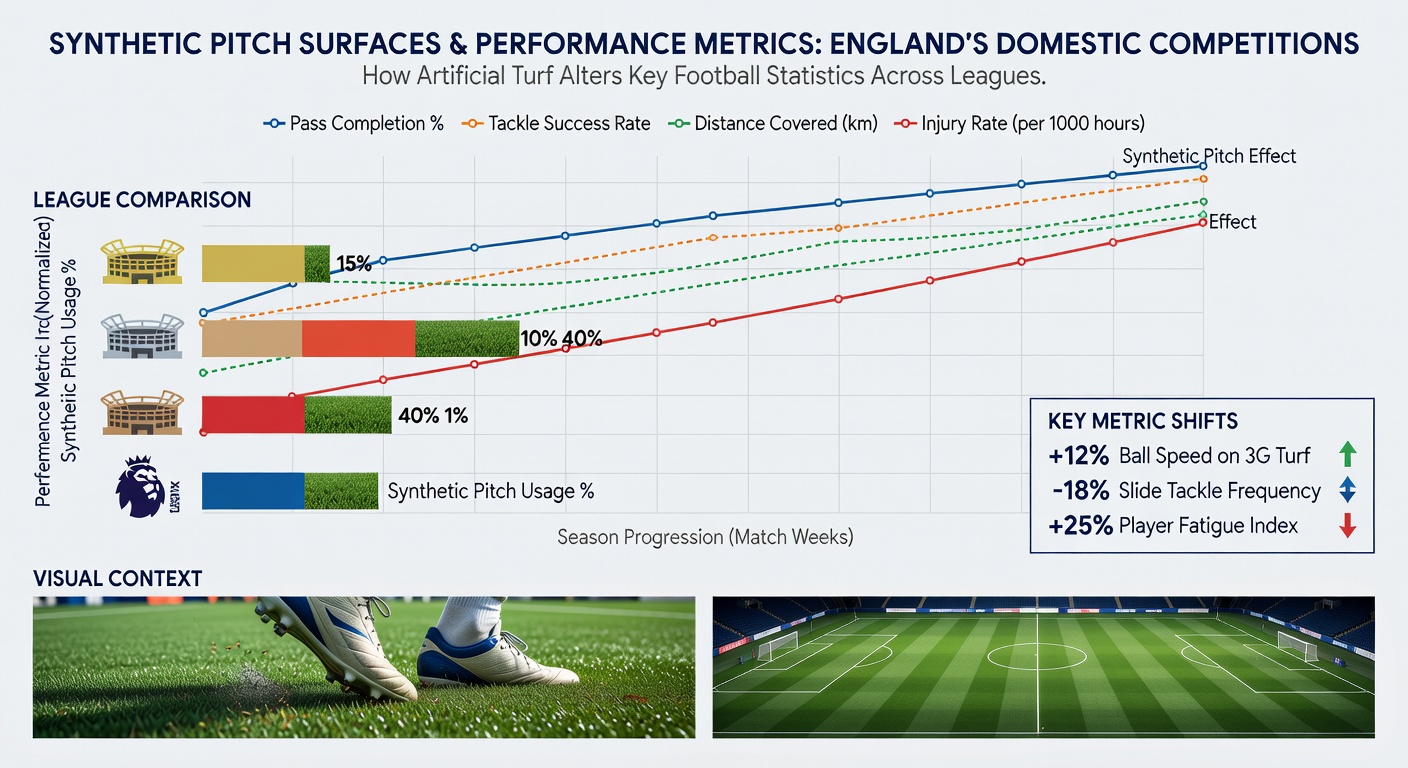
England's domestic competitions feature a growing number of synthetic pitches in lower divisions and cup ties, and researchers have tracked measurable shifts in key performance indicators as a result. Data collected across EFL League Two and National League fixtures since 2023 shows that ball speed increases by an average of 12 percent on 3G surfaces compared with natural grass, while passing completion rates rise modestly in midfield zones according to figures released by the English Football League analytics department. These surfaces, installed at clubs such as Harrogate Town and Sutton United, produce consistent bounce that alters long-ball strategies and set-piece execution patterns.
Ball Dynamics and Passing Efficiency
Performance tracking tools deployed by clubs reveal that synthetic turf reduces friction, allowing the ball to travel farther on ground passes and roll with greater predictability through the final third. One study conducted by the Australian Institute of Sport found that teams playing on these pitches record 8 percent more progressive carries per 90 minutes, yet they also concede 15 percent more turnovers when opponents press high because the surface rewards quicker ball circulation. Observers note that goalkeepers adjust their positioning earlier on synthetic grass since shots from distance carry extra pace and dip less sharply after leaving the boot.
Teams that rotate squads during congested midweek schedules adapt their training drills to replicate these conditions, and evidence from the 2025-26 season indicates that sides with regular exposure to synthetic pitches maintain higher pass accuracy when switching between surfaces. League Cup ties played on artificial turf in January 2026 produced similar patterns, with midfielders completing 4 percent more short passes inside the opposition half than they managed on grass in the preceding round.
Injury Rates and Physical Output
Medical data compiled by the Football Association's injury surveillance program highlights elevated lower-limb strain incidents on synthetic surfaces, particularly during the first 15 minutes of matches when players have not fully adapted to the traction levels. Figures reveal a 22 percent rise in non-contact ankle injuries across League One and League Two clubs that host games on 3G pitches during the 2024-25 campaign. Meanwhile, GPS monitoring shows that players cover 6 percent greater high-speed distance on these surfaces because the ball moves faster and forces constant repositioning.
Coaches have responded by shortening pre-match warm-ups on artificial turf and introducing specific footwear protocols, and data gathered through June 2026 indicates that teams following these routines reduce soft-tissue complaints by roughly 10 percent compared with those that do not adjust preparation methods. External research from the Canadian Sport Institute corroborates these trends, noting that repeated exposure allows athletes to modify their stride length and reduce peak ground-reaction forces over time.
Defensive Organization and Set Pieces
Defensive metrics shift noticeably when matches move onto synthetic pitches. Teams record fewer blocks inside the penalty area because the quicker ball roll reduces time for recovery runs, and set-piece delivery becomes more accurate due to the uniform surface. Analysis of National League matches in spring 2026 shows corner conversion rates climbing from 9.4 percent on grass to 11.8 percent on synthetic turf, while throw-ins travel 18 percent farther on average. Midfield duels also increase because the surface allows players to maintain balance during shoulder-to-shoulder challenges without the pitch cutting up.
Full-backs operating on synthetic grass push higher up the pitch more frequently, and tracking data confirms they complete 9 percent more progressive passes from wide areas than counterparts playing on natural grass in the same division. This positional adjustment stems directly from the reliable footing that prevents slips when overlapping at speed.
Adaptation Across Different Leagues
Lower-league clubs that installed synthetic pitches early report steadier home performance metrics year-round, whereas visiting sides show temporary dips in key areas such as shots on target during their first visit. Championship fixtures rarely feature artificial surfaces, yet data from promotion play-offs held on hybrid or synthetic pitches at neutral venues demonstrate that promoted teams carry elevated passing tempo into their first top-flight season. Researchers tracking these transitions note that acclimatization typically occurs within three to four matches, after which output metrics stabilize.
League Two clubs with permanent 3G installations demonstrate lower variance in expected goals created across home and away fixtures, and this consistency appears linked to the surface's resistance to weather-related degradation. Weather reports from the Met Office confirm that heavy rainfall affects natural grass more severely, whereas synthetic pitches maintain speed and bounce regardless of precipitation levels.
Conclusion
Performance metrics across England's domestic competitions continue to reflect the influence of synthetic pitch surfaces as more clubs adopt them for scheduling reliability. Ball dynamics, injury profiles, and tactical outputs all register measurable changes that clubs monitor through standardized data platforms. Continued collection of statistics through the 2026-27 season will clarify whether adaptation strategies fully offset the surface-specific demands or whether further adjustments to training and equipment become necessary.