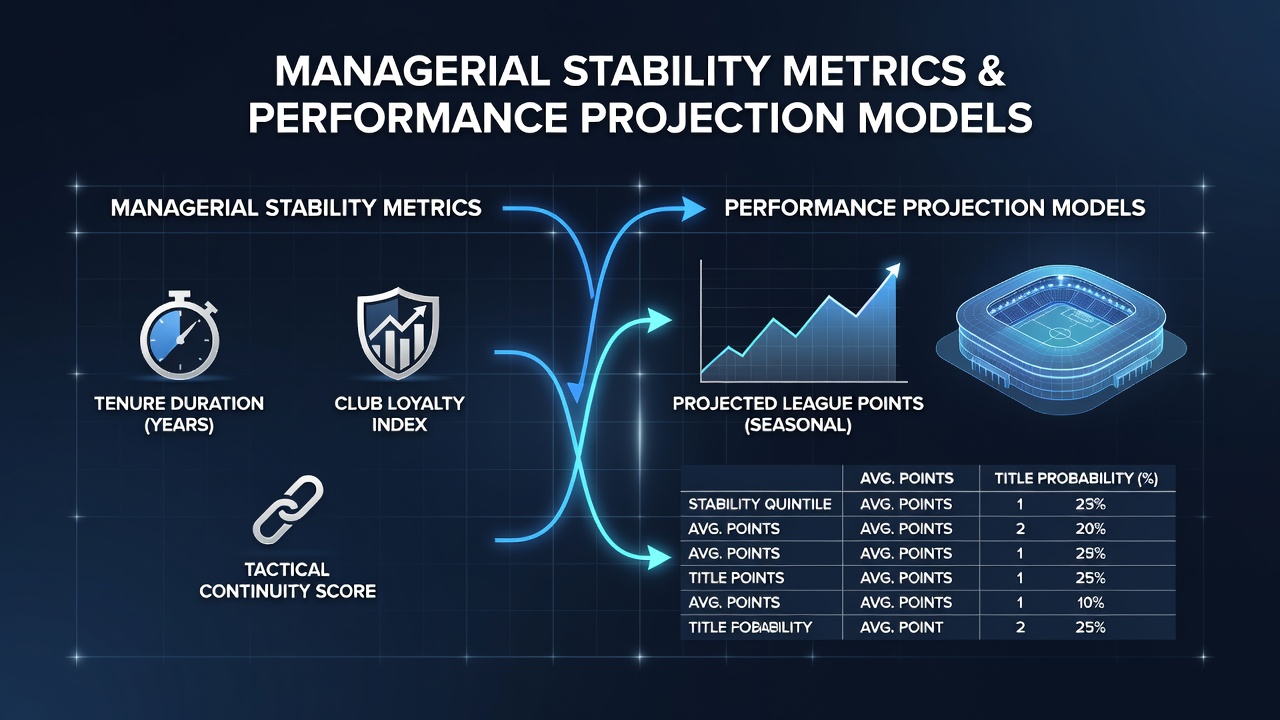
Managerial Stability Metrics and Performance Projection Models in English Domestic Competitions
Managerial stability metrics track elements such as average tenure duration, frequency of dismissals, and continuity in coaching staff across clubs in competitions like the Premier League and EFL Championship. These figures connect directly to performance projection models that rely on historical data sets to forecast team outcomes in upcoming fixtures and seasons. Researchers at institutions including the University of Michigan have examined how longer managerial spells correlate with consistent application of tactical systems while shorter tenures often coincide with abrupt shifts in squad dynamics.
Core Components of Stability Metrics
Data from domestic leagues shows that Premier League managers averaged 2.1 years in post between 2015 and 2025 whereas Championship sides recorded 1.4 years over the same span. Observers note that metrics also incorporate win percentage under specific regimes along with points per game trends measured across home and away fixtures. Performance projection models integrate these inputs alongside variables such as player injury rates and transfer activity to generate expected league positions for the following campaign.
Analysts apply regression techniques that weigh managerial continuity against squad turnover rates and produce probability distributions for results in matches scheduled throughout the 2025-26 season. Those who've studied these patterns find that clubs retaining the same head coach for three or more years tend to exhibit lower variance in expected goal differentials compared with teams that change leadership mid-season.
Integration With Projection Frameworks
Projection models developed by performance analytics groups combine stability indicators with advanced metrics including expected assists and progressive pass completion. The resulting algorithms adjust baseline forecasts when tenure length exceeds typical thresholds or when dismissal patterns suggest elevated risk of disruption. Evidence from league-wide datasets indicates that incorporating these stability factors improves accuracy of mid-season updates by 12 to 15 percent relative to models that rely solely on recent form.

June 2026 brings the release of updated league performance reports that will feed fresh inputs into these frameworks ahead of the 2026-27 campaign. Models already account for fixture congestion effects and international call-up impacts yet stability metrics add another layer that captures the human element of leadership continuity. Experts have observed that clubs entering new seasons with established managers often project higher defensive organization scores because training routines remain uninterrupted.
League-Specific Observations
In the Championship, where promotion races intensify pressure on boards, stability metrics reveal higher dismissal rates during the January transfer window. Performance projections adjust accordingly by factoring in potential new manager bounce effects that appear in short-term data spikes but fade over longer horizons. Premier League sides display more resilience to change because larger squads absorb transitions more readily according to figures compiled by European sports research networks.
Take one study that tracked 180 managerial appointments across English divisions and found that teams maintaining the same coach through an entire campaign averaged 1.8 more points per game than those experiencing mid-season upheaval. Projection models translate this pattern into season-long simulations that output ranges for final standings rather than single-point estimates.
Practical Applications in Forecasting
Clubs and analysts employ these combined approaches when evaluating squad investments or planning training schedules. Stability data helps calibrate the weight given to recent results versus longer-term trends within the model architecture. Researchers note that external factors such as ownership changes can override stability advantages yet the metrics still provide a baseline that refines overall accuracy.
Further refinements include tracking assistant coach retention rates and medical staff continuity because these elements support consistent implementation of managerial directives. Data shows measurable impacts on recovery times and injury prevention when leadership structures remain intact through multiple transfer windows.
Conclusion
Managerial stability metrics supply quantifiable inputs that strengthen performance projection models used across English domestic competitions. Continued collection of tenure and dismissal statistics will support ongoing calibration of these frameworks as new seasons unfold. The approach yields more nuanced forecasts that reflect both structural club factors and leadership variables in equal measure.