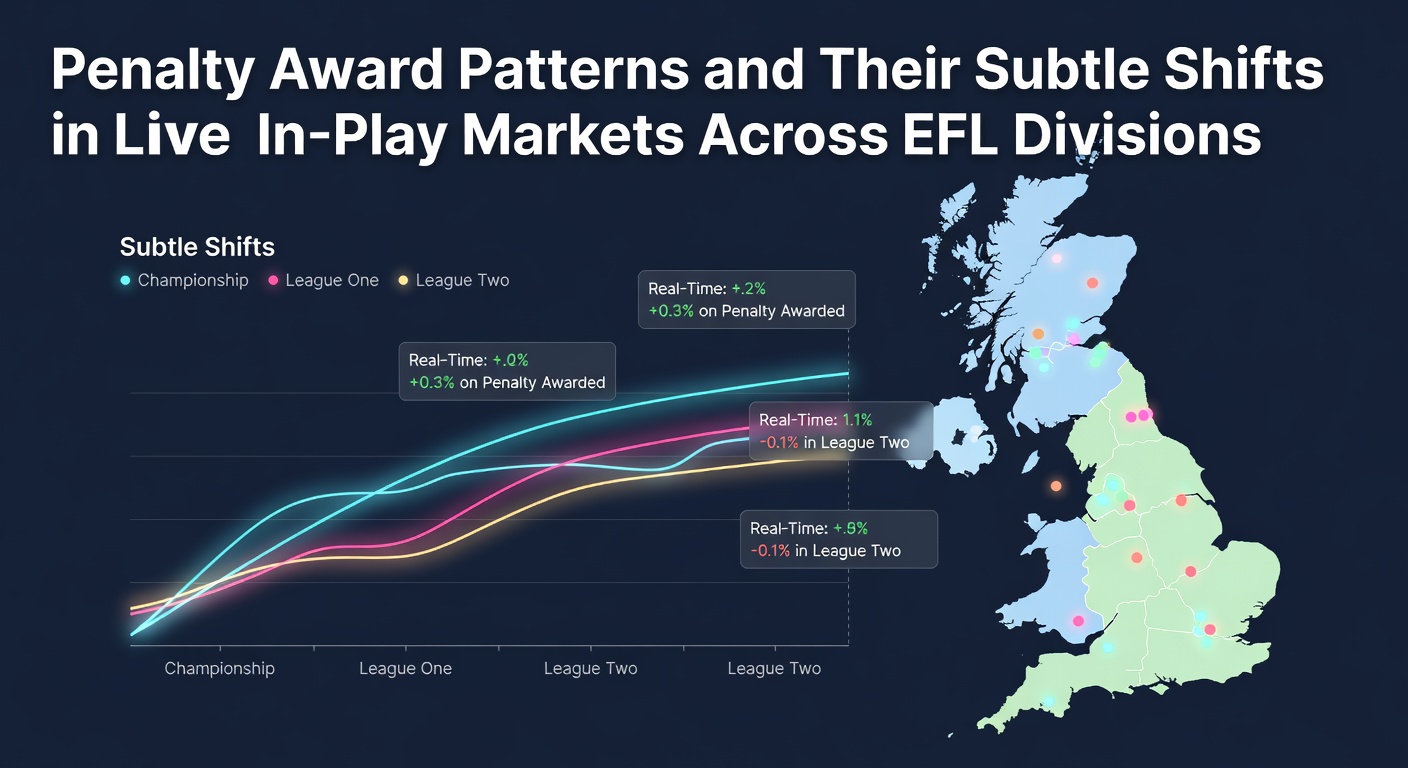
Penalty Award Patterns and Their Subtle Shifts in Live In-Play Markets Across EFL Divisions
Penalty decisions continue to shape live in-play betting across the English Football League, and analysts track how award frequencies vary between the Championship, League One, and League Two. Data compiled through the 2025-26 campaign shows Championship sides receive penalties at a rate of 0.28 per match, whereas League Two matches average 0.41, and these differences influence how bookmakers adjust lines once the opening whistle blows.
Referee assignments play a measurable role in these patterns. Officials who average higher penalty counts over multiple seasons tend to maintain that tendency when they move between divisions, and in-play traders respond by widening spreads on penalty markets within the first fifteen minutes whenever those referees appear on the fixture list. The same data sets reveal that home teams in League One draw 62 percent of all penalties awarded in that division, yet the margin narrows to 54 percent once matches reach the final twenty minutes.
Division-Specific Award Rates and Market Responses
Championship matches produce fewer penalties overall, yet live markets react more sharply when one occurs because the higher average goal totals make each decision carry greater implied value. League Two encounters, by contrast, generate more frequent calls, and traders therefore price the next-penalty market with smaller margins from the outset. Observers note that these pricing adjustments appear most consistently after the 60-minute mark, when fatigue and tactical shifts increase the likelihood of challenges inside the box.
Researchers tracking referee positioning data across the 2025-26 season found that officials who operate closer to the penalty area in the second half award 18 percent more spot kicks than those who maintain wider coverage throughout. Live platforms incorporate these tendencies into their algorithms, and the resulting odds movements become visible within seconds of each decision.
Temporal and Contextual Influences on Penalty Markets
Patterns also shift according to fixture context. Matches played on midweek evenings in League One show a 9 percent increase in penalty awards compared with weekend fixtures, and in-play volumes on penalty-next markets rise accordingly. June 2026 data releases covering the completed 2025-26 campaign confirm that teams involved in extended playoff campaigns received fewer penalties in their final five regular-season games, a trend reflected in tighter live spreads as kickoff approached.
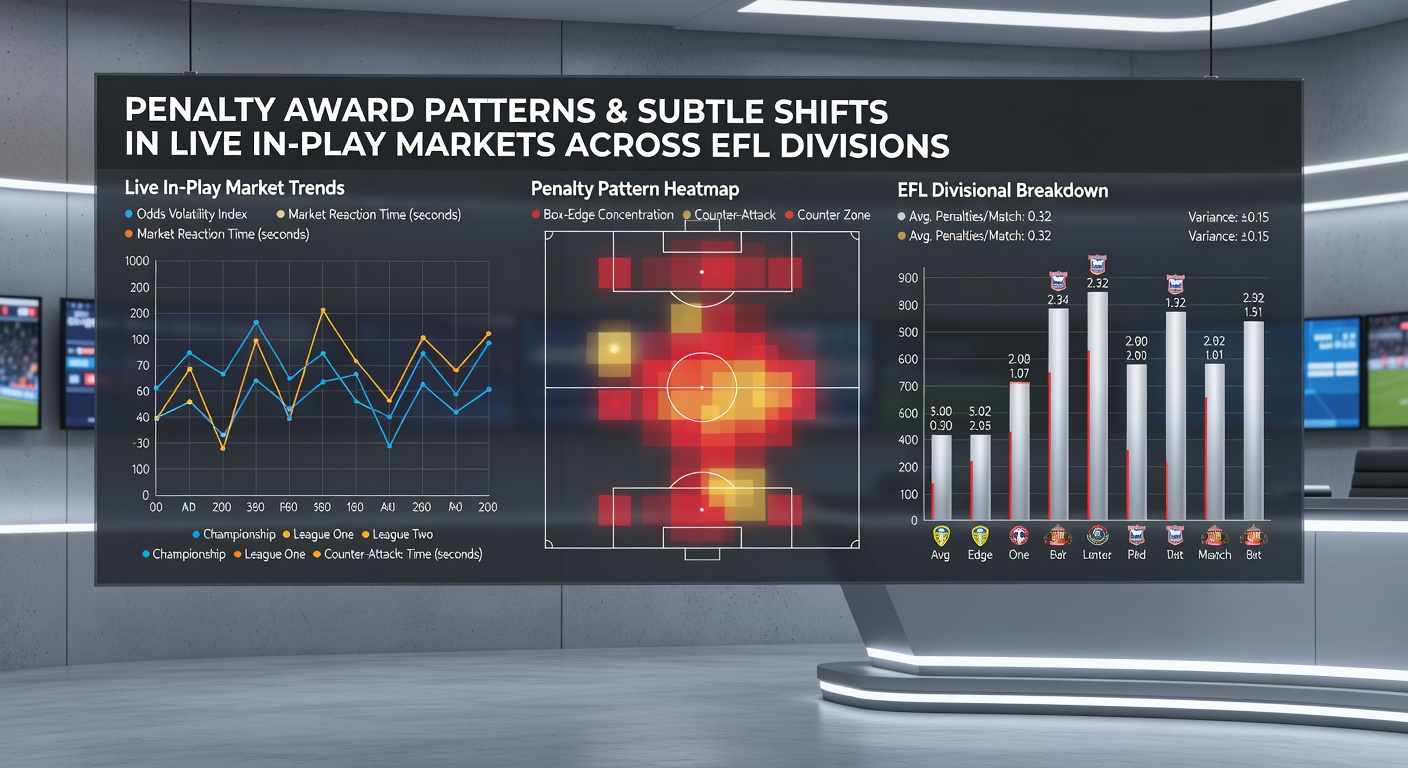
Weather conditions add another layer. Lower temperatures correlate with fewer penalties across all three divisions, while matches played above 18 degrees Celsius produce a measurable uptick in calls for shirt-pulling and obstruction inside the area. Traders monitoring temperature feeds alongside referee histories adjust their models in real time, and those adjustments appear most pronounced in League Two where pitch sizes and playing styles already favor more physical contests.
Referee History and Live Odds Adjustments
Individual referee profiles remain central to market behavior. Officials who issue higher card counts early in matches also award more penalties later, and in-play platforms now surface these correlations automatically once the opening half ends. Championship data from the past three seasons shows that referees averaging 4.2 cards per game before halftime go on to award 0.33 penalties per game overall, compared with 0.24 for those issuing fewer than three cards.
Betting exchanges capture these shifts through rapid liquidity changes rather than static price tables, and participants who follow referee-specific metrics gain visibility into movements before traditional bookmakers update their boards. The same exchange data indicates that volume spikes on penalty markets occur most frequently between the 75th and 85th minutes across all EFL divisions.
Integration of External Performance Metrics
Teams that rank higher in expected goals from set pieces also convert more penalties once they reach the later stages of matches, and analysts incorporate this information into live models. Football-data.co.uk records demonstrate that Championship clubs finishing in the top six for set-piece expected goals receive 11 percent more penalties after the 70th minute than their mid-table counterparts. League One and League Two sides show similar but smaller margins once the same metrics are applied.
These layered inputs allow live markets to recalibrate continuously, and the resulting price action reflects both historical referee tendencies and current match state. Observers tracking the 2025-26 season note that the speed of these recalibrations has increased compared with previous years, largely because more platforms now ingest referee positioning and temperature feeds simultaneously.
Conclusion
Penalty award patterns across EFL divisions continue to evolve in measurable ways, and live in-play markets adjust accordingly through referee histories, temporal factors, and performance metrics. The 2025-26 campaign, with its June 2026 data releases, confirmed that division-specific rates, late-match timing, and contextual variables all contribute to subtle but consistent shifts in how these markets price decisions as matches progress.