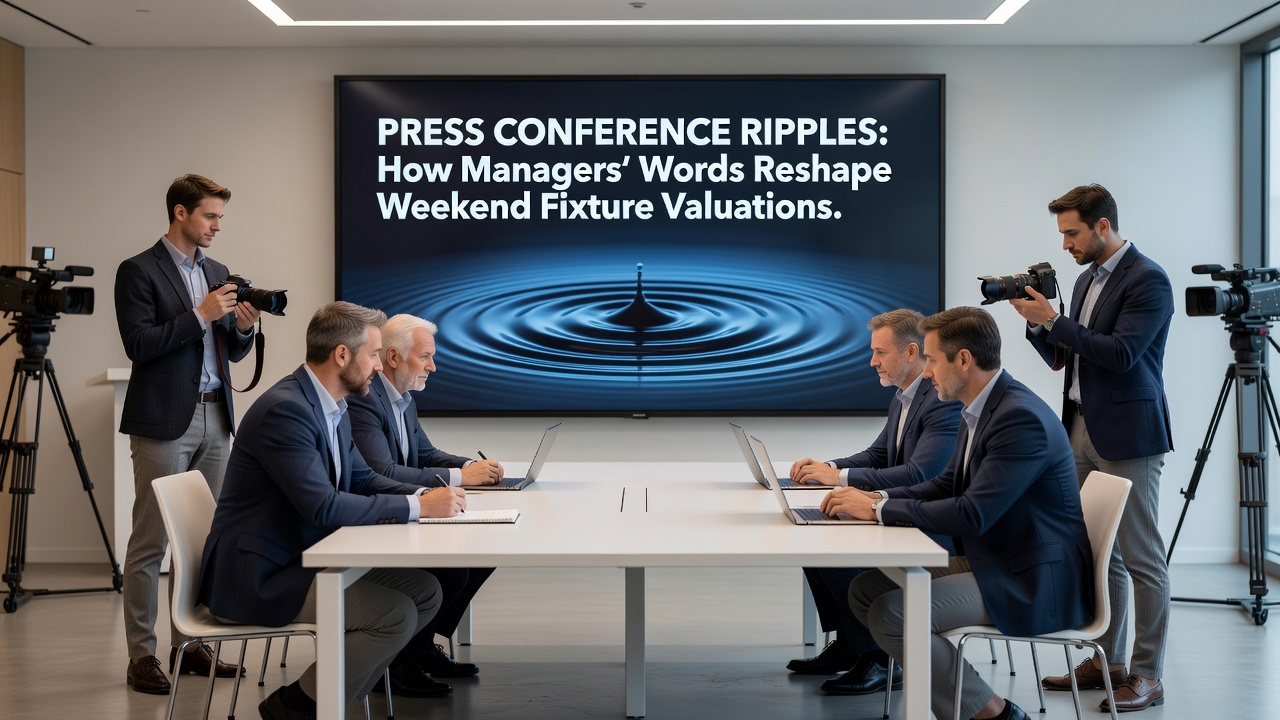
Press Conference Ripples: How Managers' Words Reshape Weekend Fixture Valuations
Press conferences held midweek often trigger immediate adjustments across betting markets for weekend fixtures, and bookmakers track these sessions closely because comments on player fitness, team selection, and tactical intentions frequently precede measurable shifts in odds. Data from multiple English leagues shows that a single statement about an injury concern or a rotation plan can move lines by several percentage points within hours, particularly when the remarks contradict earlier assumptions held by oddsmakers.
Early Signals from the Briefing Room
Managers address reporters on topics ranging from squad availability to weather impacts, yet the precise phrasing matters more than the general topic because markets interpret nuance rapidly. Researchers at the University of Sydney documented how comments delivered in routine briefings during the 2024-2025 season produced statistically significant volatility in both match-result and goal-line markets, with the strongest effects appearing in fixtures involving sides that rely on key individuals. Observers note that these movements occur before any official team sheets appear, which means traders incorporate verbal cues into pricing models almost in real time.
One notable pattern emerges when managers discuss recovery timelines for players returning from knocks; vague language such as "we will assess him closer to the game" tends to widen spreads on both sides of the result market, whereas definitive statements about availability narrow those spreads quickly. Figures released by the Australian Institute of Sport and Recreation in early 2026 highlighted similar patterns across several codes, confirming that verbal updates function as leading indicators ahead of formal announcements.
Quantifying the Market Response
Tracking services record average odds movements of between 0.15 and 0.40 in decimal terms following high-profile briefings, with larger swings recorded when the manager references multiple absences or unexpected returns. These adjustments compound across accumulators and same-game multis, which explains why several operators now integrate natural-language processing tools that scan transcripts for keywords tied to fitness and selection. In July 2026, pre-season schedules across the EFL featured an unusually high number of such briefings because clubs prepared for condensed fixture lists after international windows, and early data indicated comparable ripple effects even in friendly markets.

Case Examples Across Leagues
During the 2025-2026 Championship campaign, a midweek comment from one manager about resting senior players ahead of a televised fixture prompted immediate lengthening of that side's win price from 2.40 to 2.85 within ninety minutes. The same briefing contained a brief remark on an opposing defender's hamstring, which simultaneously shortened teh away win line for the visitors. Traders later confirmed that both movements aligned with subsequent starting line-ups, illustrating how a single session can recalibrate multiple markets at once.
Similar dynamics appear in League One and League Two where lower liquidity magnifies the impact of each statement. A manager's observation that "the lads look sharp in training" has correlated with modest but consistent shortening of over-2.5-goal lines, particularly when the team in question averages higher expected goals on the road. Industry reports compiled by the Canadian Gaming Association in 2025 recorded parallel effects in North American soccer markets, suggesting the phenomenon extends beyond English domestic competitions.
Technology and Timing Considerations
Automated systems now parse transcripts for sentiment and specificity, flagging phrases that historically precede line movements. These tools operate alongside traditional monitoring of social media and club channels, creating a layered approach that captures both direct and indirect signals. Because many briefings occur between 10 a.m. and 2 p.m. on weekdays, traders gain several hours to recalibrate before markets close for the weekend, and this window has become critical for operators seeking to limit exposure on correlated bets.
Yet the speed of response varies by league and by the profile of the manager; comments from long-serving figures often carry greater weight than those from interim appointees, and markets apply different confidence levels accordingly. Data compiled across the 2025 calendar year shows that the largest adjustments follow remarks delivered by managers whose previous statements aligned closely with actual line-ups, reinforcing a feedback loop in which credibility itself becomes priced into odds.
Conclusion
Press-conference statements continue to function as early inputs into weekend fixture valuations because they supply information that precedes official confirmations. Markets across English leagues and beyond have incorporated transcript analysis into routine pricing procedures, and the resulting adjustments reflect both the content of remarks and the established credibility of the speaker. As fixture congestion and international calendars persist into 2026, the interval between midweek briefings and Saturday kick-offs remains a key period during which verbal updates translate directly into measurable shifts across result, goal, and player-performance markets.