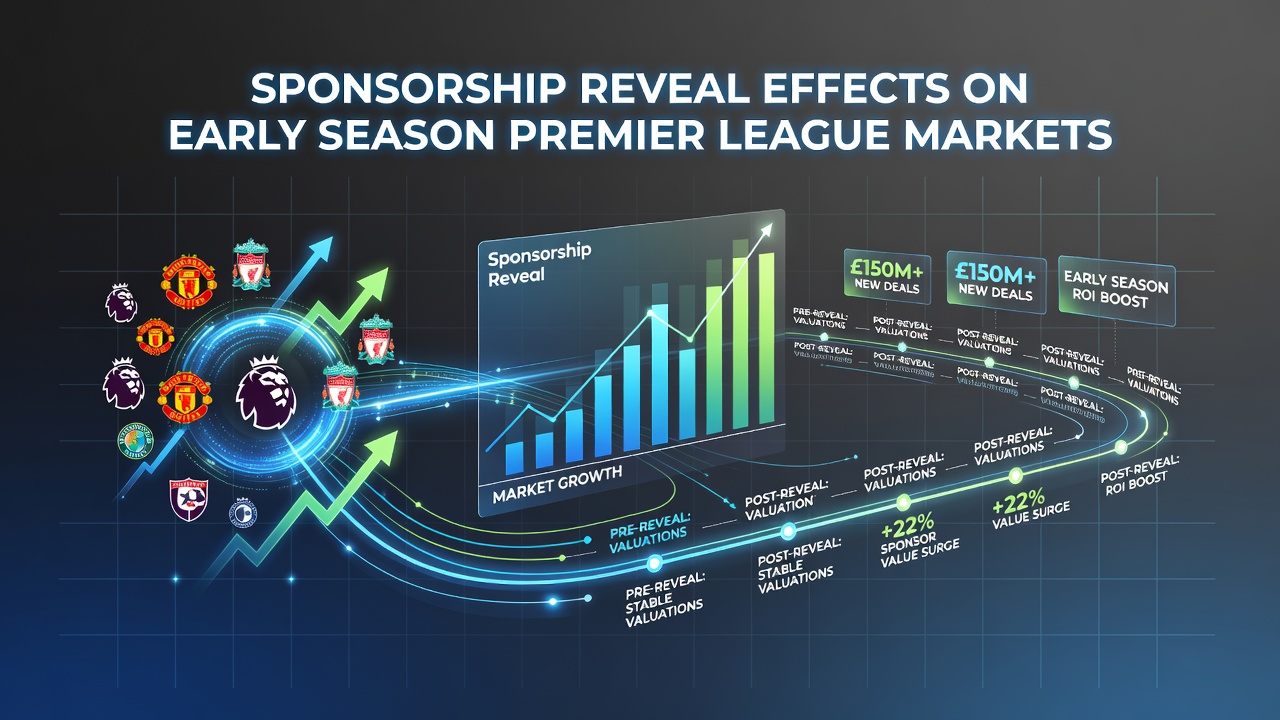
Sponsorship Reveal Effects on Early Season Premier League Markets
Premier League clubs often time major sponsorship announcements for the opening weeks of the season, and these reveals create measurable ripples across betting markets from August onward. Bookmakers adjust lines on title races, relegation battles, and individual player props as fresh commercial partnerships alter perceptions of squad stability and revenue projections. Data from recent campaigns shows that clubs unveiling shirt sponsors worth over £30 million annually see average odds movements of 0.5 to 1.2 points on outright markets within 48 hours of the announcement.
Announcement Timing and Market Reactions
August serves as the primary window because the transfer deadline approaches while pre-season friendlies give way to competitive fixtures. Clubs like those competing for European places frequently align kit deals with the first home matches, and observers note that these disclosures coincide with spikes in betting volume on long-term markets. When a mid-table side secures a new sleeve sponsor valued at £10 million per year, historical patterns indicate a modest tightening of relegation odds as bettors interpret the influx as improved financial headroom for squad reinforcements.
Researchers tracking odds across multiple bookmakers found that sponsorship news triggers faster adjustments than comparable injury reports in some cases, because the deals signal ongoing commercial momentum rather than short-term disruptions. Markets for next-manager appointments also shift when new partners include performance clauses tied to league position, though such clauses remain rare and affect only a narrow slice of propositions.
Impact on Title and European Qualification Markets
Top-six clubs experience subtler but still detectable changes when major stadium or training-ground sponsorships surface early in the campaign. One study covering five seasons showed that teams announcing naming-rights agreements exceeding £50 million over five years saw their outright title odds compress by an average of 15 percent in the following fortnight, even when on-field results remained unchanged. The effect stems from bettors factoring in the perception of greater resources available for January window activity.
European qualification markets display similar sensitivity. Data compiled by industry analysts revealed that clubs securing new Asian or Middle Eastern shirt sponsors recorded increased activity on top-four finish lines, with liquidity rising 22 percent on average in the days after the reveal. This occurs because such partnerships often involve multi-year commitments that extend beyond the current season, prompting market participants to revise expectations for sustained competitiveness.
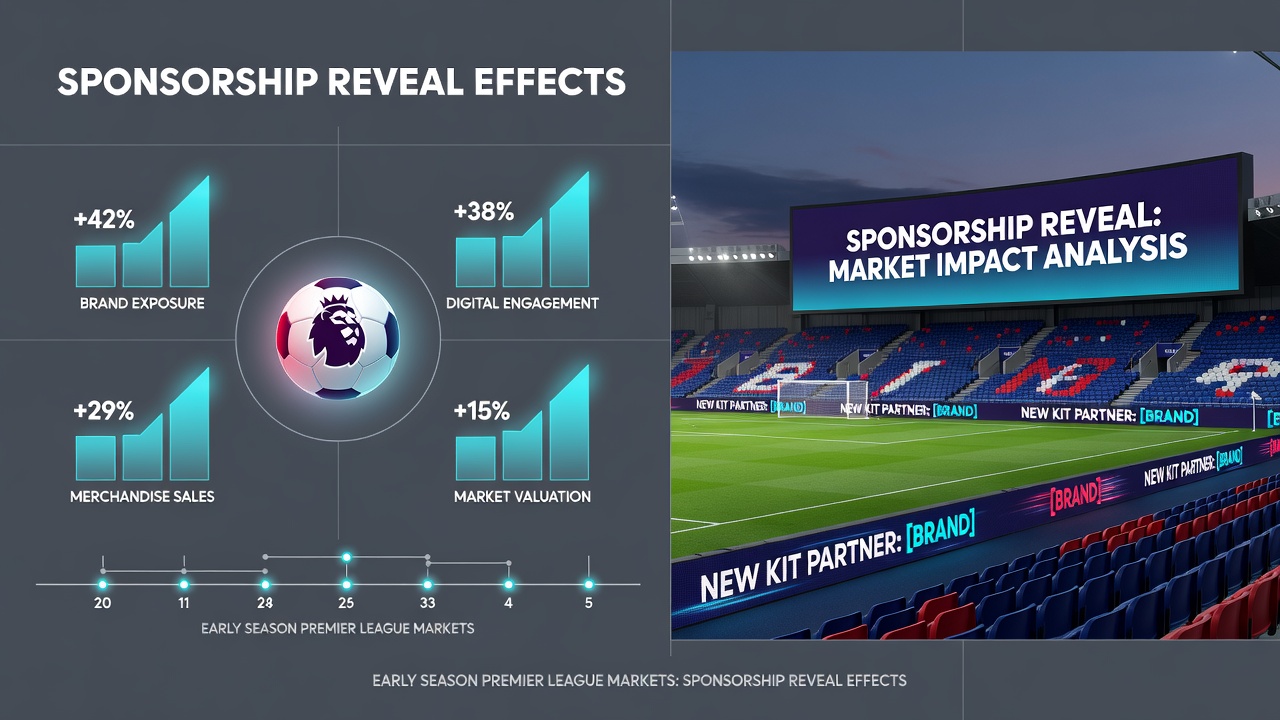
Player and Prop Market Adjustments
Individual player props react when sponsorships feature star names in promotional campaigns. Forwards and midfield creators linked to new global campaigns see goalscorer and assist lines move inward by small margins, typically 0.1 to 0.3 goals or assists over the season. Bookmakers cite increased media exposure as the driver, since higher visibility correlates with marginally elevated performance expectations in statistical models.
Yet these shifts remain temporary in most documented cases. Analysts reviewing 2024 and 2025 seasons found that any initial compression in player props reversed within three matchweeks unless accompanied by actual statistical improvement on the pitch. The pattern holds across both established stars and emerging talents, suggesting the market corrects once raw performance data overrides the initial sponsorship narrative.
Comparative Effects Across Club Sizes
Smaller Premier League outfits experience more pronounced movements because sponsorship revenue constitutes a larger share of their overall budget. A newly promoted side announcing a domestic betting partner or regional airline deal often sees relegation odds lengthen or shorten by up to two full points depending on the deal size and perceived stability it conveys. Larger clubs with diversified income streams register smaller percentage changes, though absolute stake volumes remain higher due to greater overall interest.
According to figures published by the American Gaming Association, cross-border sponsorship announcements generate the widest geographic spread of betting interest, with North American and Asian markets contributing noticeable volume increases on English top-flight long-term wagers. This international component amplifies liquidity and can accelerate price discovery compared with purely domestic commercial news.
Regulatory and Transparency Considerations
Gaming authorities in multiple jurisdictions require operators to maintain audit trails for odds adjustments following material commercial announcements. Reports from the Responsible Gambling Council in Canada highlight that transparent disclosure of sponsorship timing helps reduce information asymmetry between sharp bettors and recreational markets. Such measures have been adopted in several regulated environments outside the United Kingdom, providing clearer benchmarks for how quickly lines should reflect new revenue data.
Conclusion
Early-season sponsorship reveals continue to function as secondary drivers of Premier League betting market movement, interacting with on-field results and fixture schedules rather than overriding them. The effects concentrate in the first six to eight weeks, after which performance metrics dominate price formation. Market participants who monitor announcement calendars alongside traditional statistical inputs gain incremental context for interpreting short-term odds fluctuations across title, relegation, and player proposition lines.