
Tracing Fixture Congestion Patterns in English Leagues and Their Influence on Midweek Market Shifts
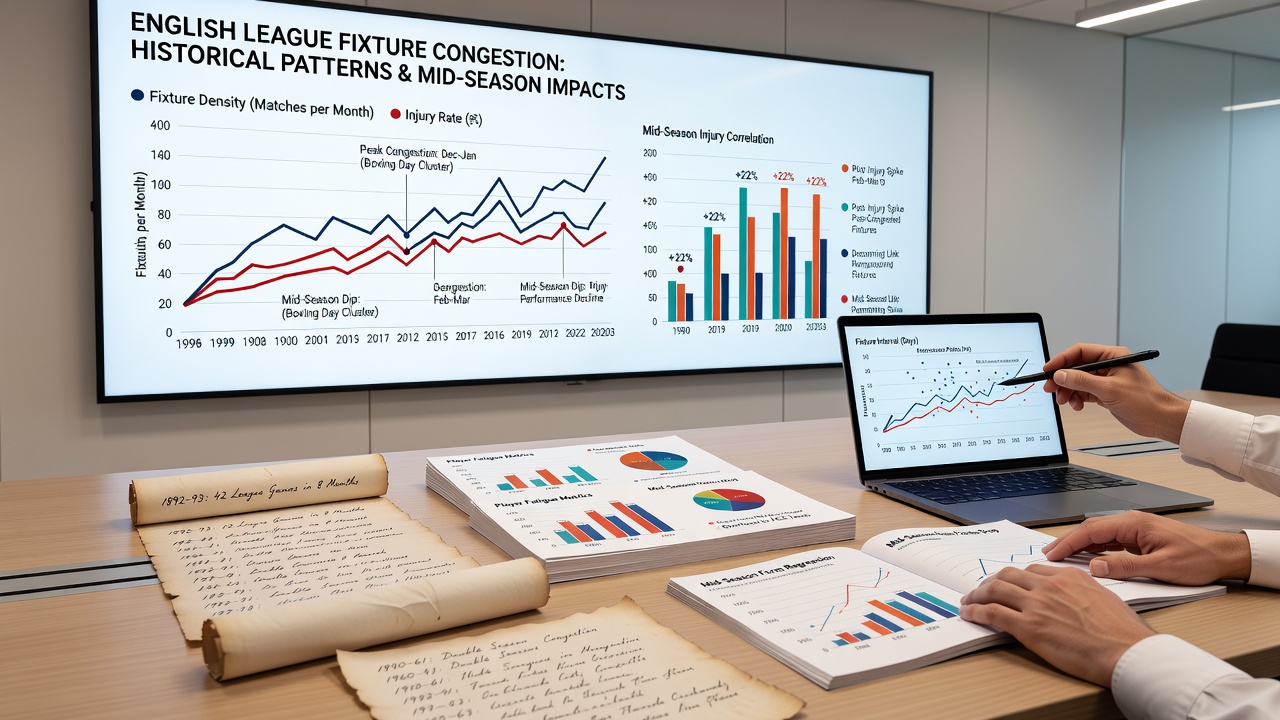
English football has long dealt with packed calendars that force clubs into sequences of matches with minimal recovery time, and observers have tracked how these stretches affect betting markets during midweek rounds. Records from the Premier League and EFL divisions show repeated cycles where congestion correlates with measurable adjustments in odds offered by multiple operators, particularly when teams play three games in eight or nine days.
Documented Historical Cycles of Congestion
Seasons stretching back to the early 2000s reveal clear patterns, especially after winter breaks end and European commitments overlap with domestic fixtures. Data compiled by performance analysts indicate that clubs averaging fewer than four rest days between matches experience shifts in expected goal outputs, which bookmakers incorporate into line movements ahead of midweek fixtures. In the 2018-19 campaign, for instance, several Premier League sides navigated nine matches across 28 days, and records show corresponding tweaks in totals markets at multiple betting platforms.
Championship and League One schedules add further layers because promotion and relegation battles extend into late spring, creating additional midweek slots. Researchers examining EFL archives note that teams involved in playoff pushes during congested periods often see defensive metrics decline, prompting bookmakers to adjust handicap lines and over-under thresholds accordingly.
Links Between Scheduling Pressure and Market Reactions
Multiple seasons demonstrate that fixture density influences how operators set and revise prices in the days leading up to midweek games. When schedules compress, betting exchanges and traditional bookmakers have recorded faster movements in player performance props and team totals, reflecting updated assessments of fatigue. Figures from past campaigns show that markets for matches involving sides with four or fewer rest days between fixtures tend to open with wider spreads before tightening as additional information emerges.
August 2026 marks the opening of another season where similar overlaps are anticipated, given the continued demands of domestic cups and European competitions. Historical datasets suggest that early-season congestion, though less severe than winter blocks, still produces detectable adjustments, particularly in midweek Carabao Cup ties where squad rotation becomes necessary.
Comparative Adjustments Across Bookmakers
Analysis of odds from several major platforms reveals consistent but not identical responses to congestion signals. One operator might move a total goals line by half a point within 48 hours of schedule confirmation, while others adjust player-specific markets such as shots on target or assists based on the same workload data. Records indicate that these shifts occur more frequently when two congested teams meet, as the combined effect on pace and scoring potential becomes harder to model precisely.
Studies on scheduling impacts, including work referenced through academic channels at institutions tracking sports performance, confirm that recovery time influences key performance indicators. Those findings align with observed market behavior, where bookmakers incorporate travel distance and fixture sequence into their pricing algorithms for midweek rounds.
Seasonal Examples and Data Patterns
During the 2022-23 season, a cluster of midweek Premier League fixtures followed a congested international break, and betting records show elevated volatility in both match-winner and draw-no-bet markets. Similar episodes in the Championship during 2024-25 produced documented changes in Asian handicap lines across operators when teams played with shortened preparation periods. Analysts tracking these movements note that the adjustments often stabilize once lineups are released, yet initial openings reflect the historical weight of congestion data.
League One and League Two divisions exhibit parallel trends on a smaller scale, with cup replays adding extra midweek dates that prompt further recalibrations. Cross-referencing of historical fixture lists against odds archives demonstrates that markets respond most noticeably when congestion exceeds typical thresholds established over multiple campaigns.
Conclusion
Historical records establish recurring connections between English league fixture density and the way bookmakers recalibrate midweek markets. Patterns observed across Premier League and EFL seasons provide a framework for understanding how scheduling pressures translate into odds movements at various operators. As August 2026 approaches, those same datasets continue to inform assessments of upcoming rounds where recovery windows remain limited.