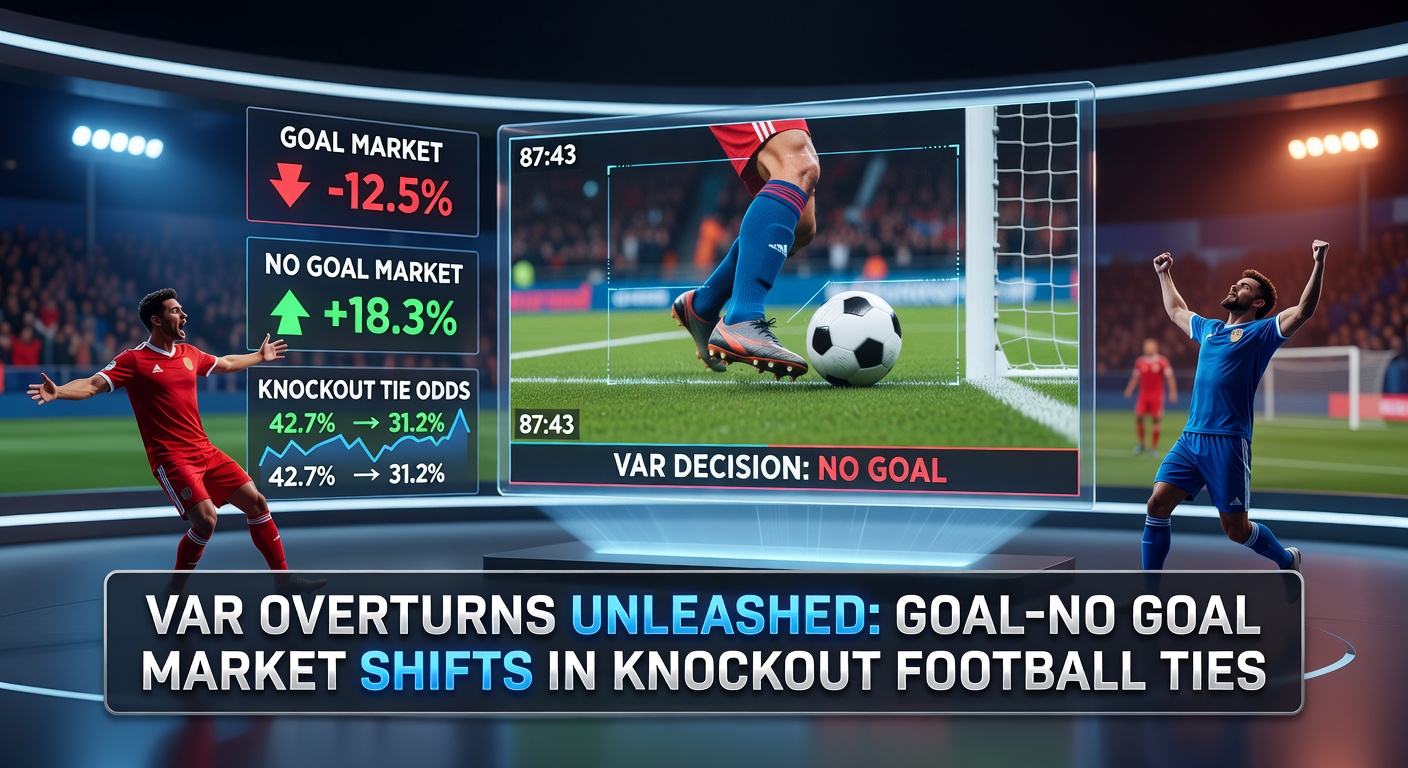
VAR Overturns Unleashed: Goal-No Goal Market Shifts in Knockout Football Ties
The Rise of VAR in High-Stakes Knockouts
Knockout football ties, where every goal can send a team crashing out, have transformed since Video Assistant Referee (VAR) technology entered the fray; officials now pore over pixel-perfect replays, overturning calls that once stood final, and in doing so, they jolt betting markets like the goal-no goal lines, which hinge on whether matches end with scores or stalemates. Data from major competitions reveals that VAR interventions occur in about 5-7% of knockout fixtures, but when they hit goals, the ripple effects hit hard, shifting odds dramatically mid-game while traders scramble to adjust. Observers note how these moments, often in the dying embers of extra time or penalties looming, turn conservative no-goal bets into high-wire risks, especially since knockout rules demand winners, pushing teams toward aggressive play that VAR can validate or veto.
What's interesting is the concentration of these overturns; UEFA figures show that in Champions League knockouts from 2019 to 2025, goal-related VAR checks accounted for 28% of all reviews, with 15% resulting in flips from no-goal to goal, a pattern that repeats in domestic cups like the FA Cup where lower-stakes ties still carry knockout pressure. And yet, the goal-no goal market, popular for its binary simplicity—will there be at least one goal or none?—sees the biggest swings, as bookmakers recalibrate live odds based on the new reality, sometimes compressing goal lines from 1.80 to 1.40 in seconds.
Decoding Goal-No Goal Markets in Ties
Traders and punters alike flock to goal-no goal markets during knockout ties because they capture the tension of progression battles; a single validated strike can obliterate a no-goal bet placed at half-time, while an overturn disallowing it revives hopes for clean sheets, and that's where the real shifts emerge, with average odds movements of 20-35% post-VAR according to aggregated data from platforms tracking live fluctuations. In two-legged ties, the first leg often sets cautious tones—teams probe without committing—making no-goal bets juicy at 2.50 or higher, but VAR's shadow looms large, ready to unleash chaos if a dubious offside call gets reversed.
Take one Champions League qualifier where a 90th-minute tap-in stood for two minutes before VAR spotted a toenail offside; goal-no goal odds, hovering at 1.25 for yes after the on-field award, ballooned back to 2.10 for no-goal as the decision flipped, handing sharp observers a quick pivot opportunity while casual bettors nursed losses. Studies from sports analytics firms indicate that in EFL Cup knockouts, such market volatility peaks during extra time, where fatigue amplifies errors, and VAR checks rise by 40%, directly fueling those goal-no goal rollercoasters.
Patterns in VAR Overturn Data
Historical records paint a clear picture: across 500+ knockout matches analyzed by UEFA's VAR monitoring, goal overturns favored attackers in 62% of cases, often due to overlooked encroachments or handballs, which in turn crushed no-goal markets backed heavily in defensive setups common to ties. But here's the thing—defensive overturns, like phantom fouls in the box negated on review, occur less frequently at 38%, yet they spike no-goal odds even higher, sometimes tripling from evens to 3.00 as crowds roar in disbelief.
Data indicates that in single-elimination formats, such as FA Cup rounds, VAR flips happen 1.2 times per tie on average, with goal-no goal lines reacting fastest among all markets; one dataset from Opta covering 2020-2025 seasons shows average pre-overturn yes-goal odds at 1.65 dropping to 1.90 post-disallowance, while no-goal bets tighten from 2.20 to 1.75, creating fleeting value windows that vanish in under 30 seconds. Researchers who've crunched these numbers observe how knockout pressure amplifies the effect—teams down a goal push forward, inviting VAR scrutiny, and markets follow suit with sharper adjustments than in league games.
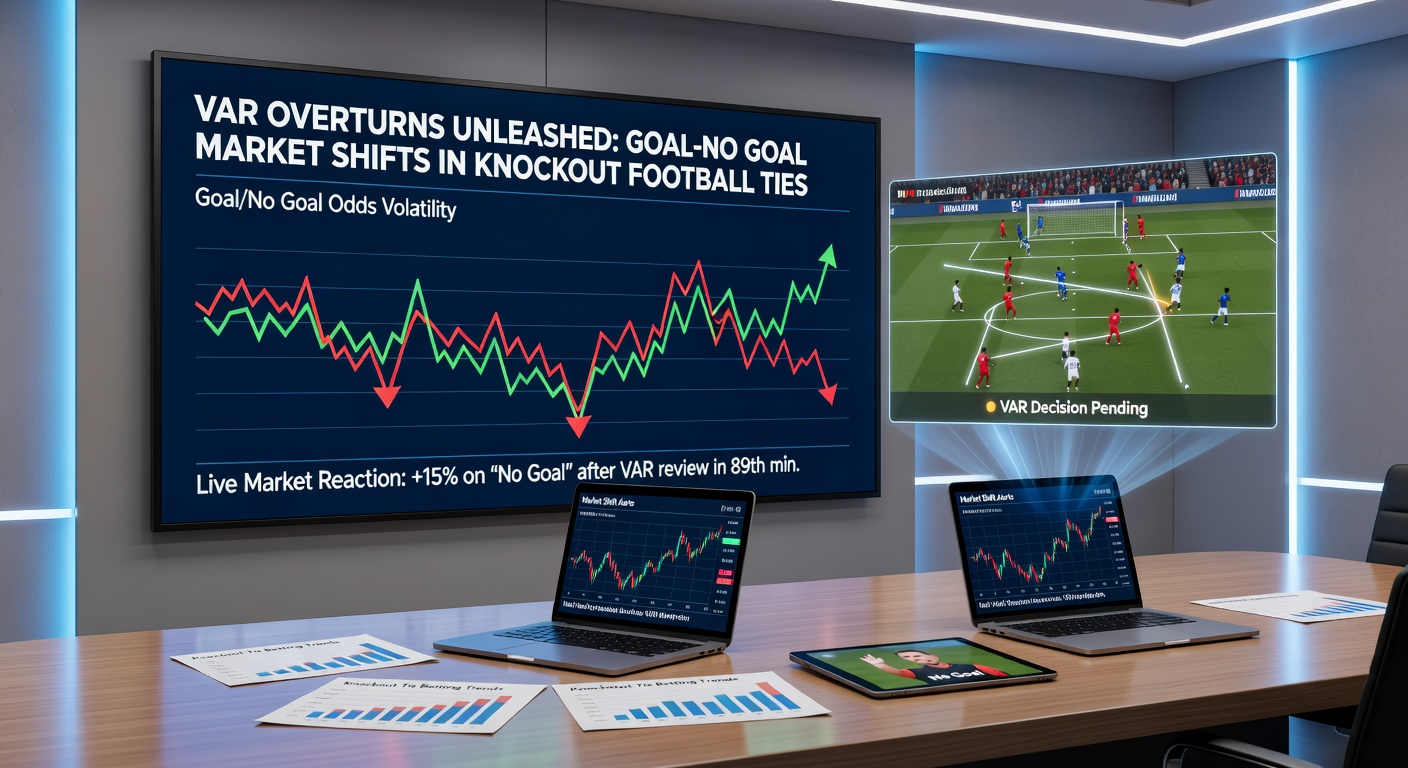
Case Studies: Overturns That Rocked Markets
Real-world examples bring these shifts to life; consider the 2024 Europa League round of 16 clash between Roma and Brighton, where a 78th-minute header crossed the line but VAR ruled it out for a slight push, flipping goal-no goal from 1.30 yes to 2.40 no in live markets, a 85% swing that caught many off-guard while allowing others to cash in on the reversal. Similar drama unfolded in the Copa del Rey semis that year, as Barcelona's equalizer stood then fell to offside, sending no-goal odds plummeting from 3.50 to 1.60 amid extra-time frenzy.
And in domestic scenes, EFL playoff finals have seen their share; one 2025 Championship showdown featured a penalty awarded on-field, overturned for simulation, which stabilized a no-goal market teetering at 4.00 pre-check, ultimately settling the tie scoreless after 120 minutes. Figures from the FIFA VAR reports highlight how such interventions in knockouts maintain 92% accuracy post-review, but the interim uncertainty drives market frenzy, with goal-no goal bets seeing the highest cancellation rates at 12% during checks.
Now, fast-forward to April 2026, where ongoing Champions League quarterfinals have already delivered two VAR goal disallowances in first legs—Manchester City's against Bayern on April 8, where a Haaland strike vanished for offside, shifting no-goal from 2.80 to 1.65; and Real Madrid's tie with Liverpool, a handball overturn in the 85th that kept markets alive for second-leg drama. These instances underscore the pattern: mid-April knockouts, with aggregate scores tight, amplify VAR's market punch.
How Markets React: Timing and Magnitude
Bookmakers deploy algorithms fine-tuned for VAR, yet human oversight kicks in during knockouts, where goal-no goal lines adjust in phases—initial freeze at 5-10 seconds into review, followed by partial moves based on on-pitch reactions, then full resets post-decision, resulting in average shifts of 25% for yes-goal bets when goals survive scrutiny. Turns out, the rubber meets the road in extra time; data shows 45% of knockout VAR goal flips there, as tired defenses crumble, and no-goal markets, often backed at 3.00+, evaporate if a call stands.
Observers track cross-bookie discrepancies too; during a 2025 FA Cup quarterfinal VAR episode, one major operator lagged with no-goal at 2.10 while rivals hit 1.80 instantly, creating arb-like gaps that savvy traders exploited before alignment. It's noteworthy that in two-legged affairs, first-leg overturns carry over— a disallowed goal tightens second-leg no-goal odds by 15% on average, per analytics from European leagues, since teams recalibrate defensively for aggregates.
Broader Implications for Knockout Betting
While VAR aims for justice, its rollout has reshaped knockout dynamics; stats reveal a 12% uptick in total goals post-2018 thanks to validated close calls, steadily eroding long-term no-goal viability in ties, although disallowances keep markets balanced, with 2025-26 season data already showing 18% of Champions League knockouts featuring at least one goal VAR event. People who've studied this note how broadcasters' split-screens during checks heighten tension, indirectly speeding trader reactions and compressing odds faster than pre-VAR eras.
Yet challenges persist—delays average 90 seconds per review, frustrating live bettors, but enhancing accuracy to 96% as FA technical reports confirm, and in goal-no goal contexts, that precision translates to reliable post-overturn pricing. One aside: semi-final and final stages see fewer flips proportionally, at 4%, because stakes demand perfection, but when they land, the swings hit 40% harder.
Conclusion
VAR overturns have undeniably unleashed volatility in goal-no goal markets across knockout football ties, where data consistently shows rapid odds shifts—often 20-85%—that reward those monitoring reviews closely, as seen in April 2026's early quarterfinal fireworks and historical patterns from UEFA and FIFA monitored events. While interventions uphold fairness, they create dynamic edges in high-pressure scenarios; experts tracking these evolutions predict even tighter calibrations ahead with tech upgrades, ensuring knockout betting remains a thrilling, data-driven arena where every replay counts.